
Landscaping with Native Coneflowers (Echinacea) in North Alabama in 2026
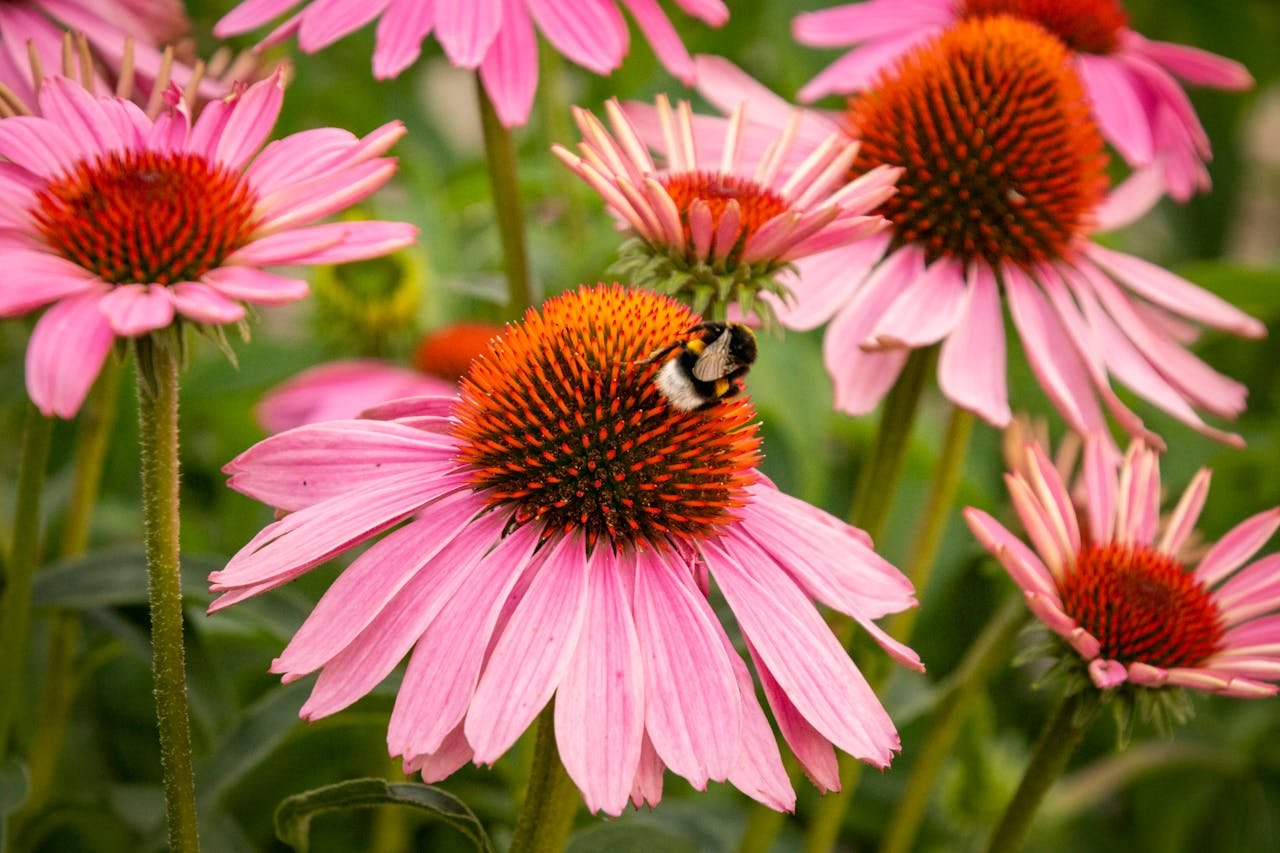
Bumble bee enjoys a coneflower patch in the wild.
In this detailed blog post, we’ll explain the benefits and best methods for landscaping with coneflowers in Huntsville, AL and surrounding areas.
What are Coneflowers?
Coneflowers (Echinacea) are robust, beautiful perennial flowers that require substantial sunlight. They are native to North American prairies such as the Great Plains, the Great Lakes region, and the Coastal Plain, which includes the Tennessee River Valley. They are extremely hardy and can survive in a wide range of climates (roughly USDA zones 3–9). These flowers look similar to daisies but are distinguished by a large, central spiny cone and petals that point downwards. These features give them the common name 'coneflower.' Next, we’ll discuss in detail why coneflowers are an excellent plant for natural landscape design in Huntsville.
Why are Coneflowers Good For Landscape Design in Huntsville?
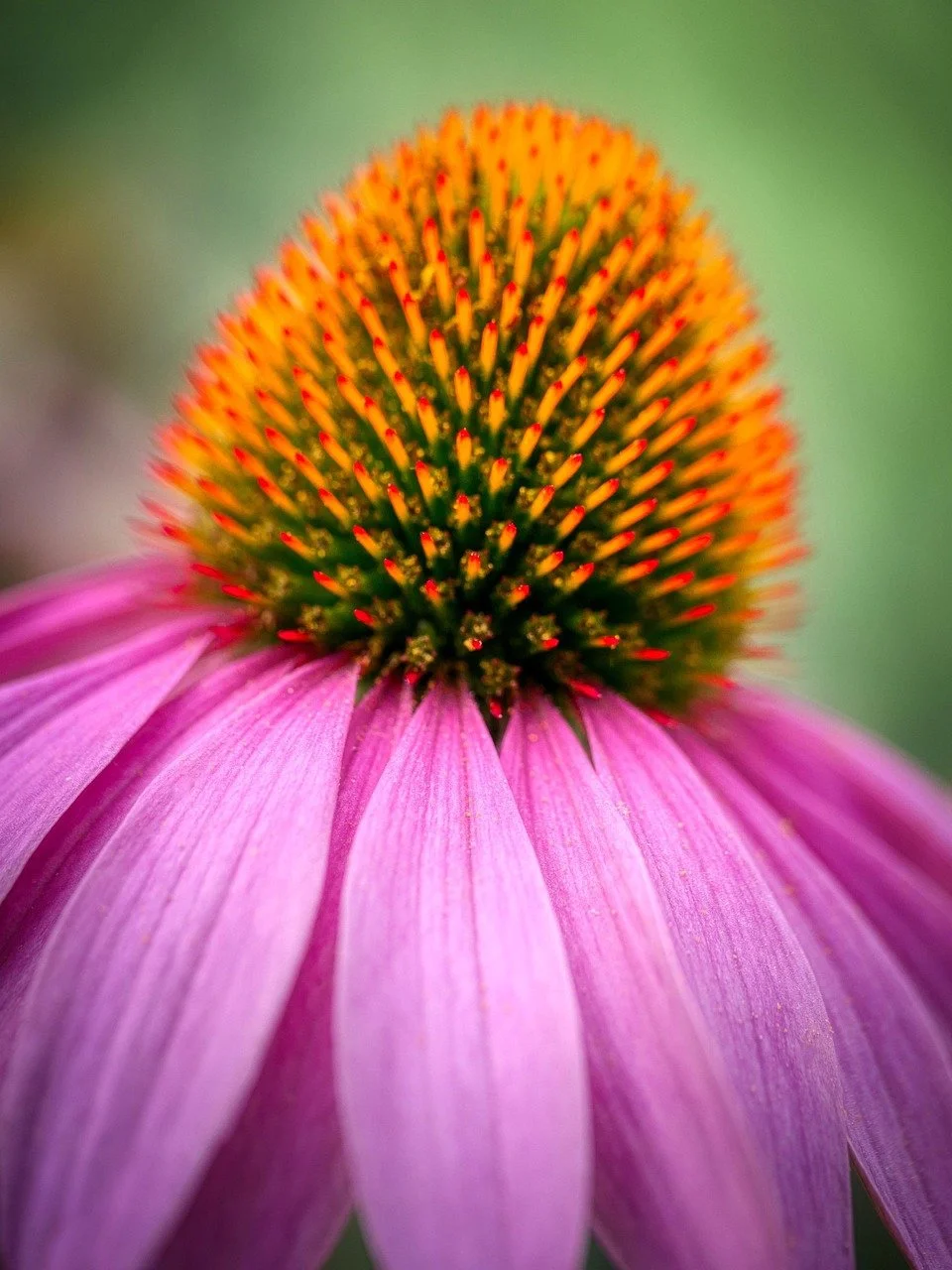
Close-up of purple coneflower showcasing the “cone“ and drooping petals
Huntsville homeowners and businesses in need of landscape design services can benefit from incorporating native plants. Coneflowers in particular are a good choice. These flowers have several functional and aesthetic qualities for landscape design.
Functional Benefits of Coneflowers for Landscape Design
Durable stems that don’t need stakes or supports
2-4 feet of vertical reach for strong framing presence
Drought resistant (limited watering requirements)
Exceptionally adaptable to clay and sand substrates common in Huntsville and surrounding areas
Major pollinator attractants which provide Monarch Butterflies and Honey Bees with nectar
Long roots keep sandy soil stable which prevents erosion
Visual Appeal of Coneflowers for Landscape Design
Distinct central cone (disk florets) surrounded by ray florets creates a bold, architectural shape that contrasts well with soft grasses
Multiple native species with a variety of shapes
E. purpurea & E. tenneseensis: Typically feature horizontal or slightly upturned petals for a cheerful, daisy-like look.
E. pallida & E. simulata: Feature elegant, drooping (reflexed) petals that flutter in the breeze, offering a whimsical, wilder aesthetic
Color options including:
Purple and pale pink native flowers
Newer cultivars have warm sunset tones (oranges, yellows, and creams) that can brighten up a planting design.
Long, periodic bloom periods of 4-6 weeks from mid-spring (April-May) to fall (September-October)
“Filler” plants that provide great ground cover
How Are Coneflowers Used in Landscape Design in North Alabama?
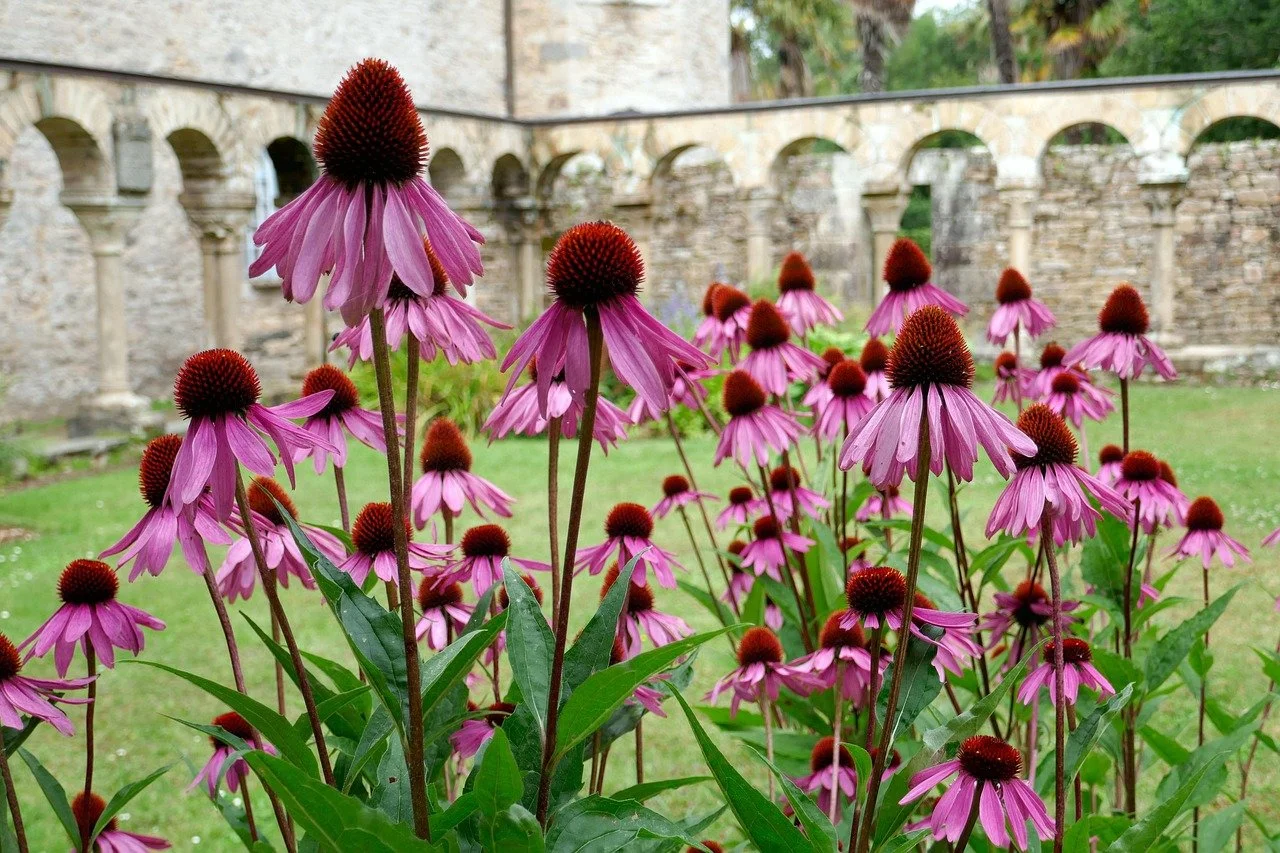
Coneflower patch contrasted against white brick columns.
In the Huntsville and North Alabama region (Zone 7b/8a), Coneflowers are used by landscape designers to bridge the gap between manicured borders and naturalized areas.
Landscape designers often use purple coneflowers (E. purpurea) in large “drifts” or swoops rather than single plantings. This mimics their natural prairie habit and creates a high-impact visual punch.
The “Cheyenne Spirit” Mix: For a more modern or cottage-style look, the Cheyenne Spirit coneflower is frequently used. It is a seed strain that produces a mix of warm colors (rich red, orange, yellow, and cream) on uniform plants. It is highly durable in Alabama heat and is often planted alongside blue Salvias or Russian Sage for color contrast. It is a hybrid (manmade) species rather than a native plant.
Landscape designers may use the Yellow Coneflower (E. paradoxa—often the parent of yellow hybrids). While native to the Ozark region of the United States, the Yellow Coneflower grows exceptionally well in North Alabama.
Purple coneflowers are perfect for adding beautiful contrast to lighter colored brick and vinyl siding homes. Additionally, these flowers work well with homes featuring weathered cedar shakes as the faded purple hues of the wood are brought back into focus.
All of the morphs described above can be used in the same landscape design to provide a rich, balanced color pallet.
At Foraging Ahead, we focus on using the most common regional species:
Echinacea pallida (Pale Purple Coneflower)
Echinacea purpurea (Purple Coneflower)
Echinacea simulata (Whorled Coneflower),
Echinacea tennesseensis (Tennessee Coneflower).
How to Care For Coneflowers in Huntsville Alabama?
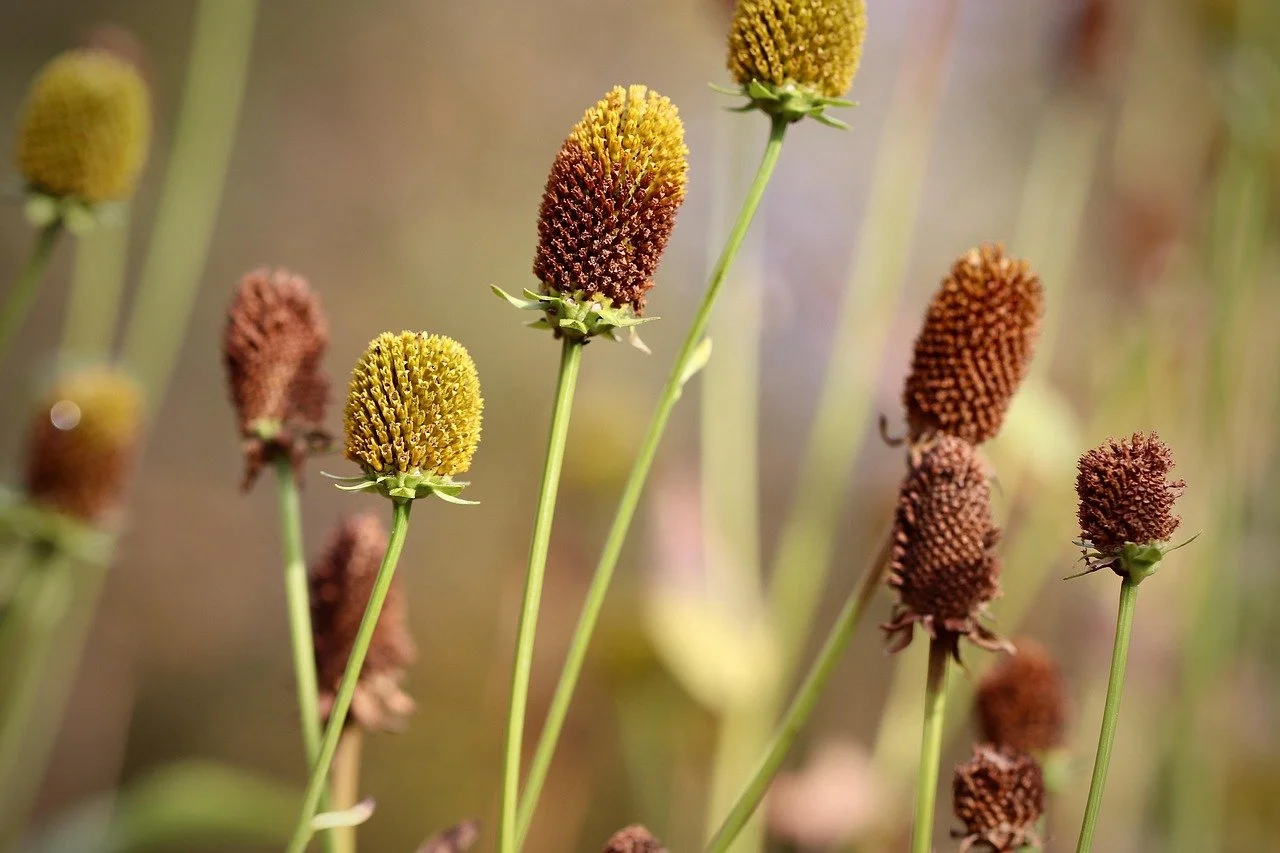
Deadheads of coneflowers
Coneflower Watering Requirements
To care for coneflowers in the North Alabama climate, it is necessary to avoid using excessive water or fertilizer. For coneflower watering requirements, new plants from seed should be watered deeply twice a week during their first growing season to help establish their deep taproots. Once established, they become remarkably drought-tolerant; in Huntsville summers, they typically only require supplemental water during prolonged dry spells lasting two weeks or more. Overwatering is a frequent mistake, as it leads to root rot—a common killer of perennials in heavy Alabama clay soils. October is typically the only time you’ll want to water more often as this is driest month in North Alabama.
Coneflower Pruning
Pruning should also be done in moderation. It’s recommended that old blooms should be trimmed off after the first successful blooms to encourage new flowers as summer progresses. As fall approaches and transitions to winter, avoid dead heading so that birds have easy access to the seeds of the cones. If desired, clip the stems at the soil to prepare the way for fresh spring flowers.
Want to Learn More About Coneflowers for Landscape Design?
Foraging Ahead is Huntsville Alabama’s choice for natural landscape design with coneflowers and other native plants. Our expert landscape designer, Aaron Stiles, can provide free estimates and work with you to create a beautiful yard using the best methods available. Ready to get started? Click the link below to start your landscape design journey.