
Alabama Lawn Care 2026: Drought Tips & Alternatives
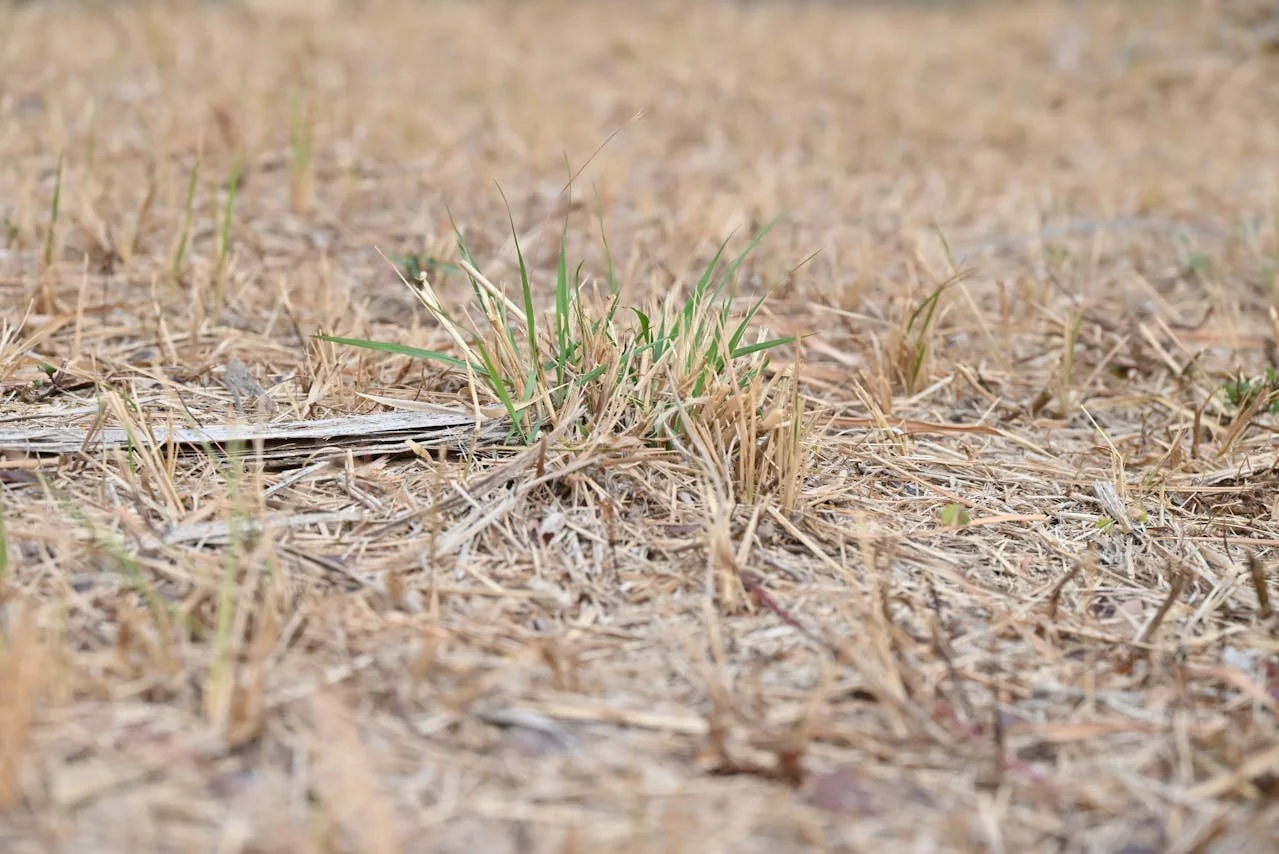
Dried up Alabama lawn
As of April 2026, Alabama is experiencing abnormal drought conditions across the entire state. Huntsville, in particular, is facing a severe drought that is heavily impacting the landscaping and gardening efforts of homeowners and businesses alike. Popular turf grasses such as Bermuda and Centipede usually thrive during our hot, rainy spring and autumn seasons. However, prolonged dry conditions have made it exceptionally difficult to maintain these traditional, thirsty lawns. In this article, we’ll cover actionable ways to help your existing grass survive the drought without draining your wallet—and explore how replacing failing turf with resilient, low-maintenance native alternatives like sedges, Creeping Phlox, and more can help!
Lawn Care During Drought
One easy way to keep your lawn and landscape plants watered well is to water early in the mornings as it prevents evaporation in the hot sunny conditions of noon and later in the day. Automated sprinkler systems can help massively when it comes to watering efficiently without needing to wake up before sunrise. You can read a study here on how much a difference it can make: Texas A&M: Landscape Water Conservation
Don’t mow too low! The top foliage of many plants, turf grass included, is responsible for a majority of photosynthesis that powers growth. Mowing too low forces grass colonies to regrow stems and leaves vertically rather than spreading laterally across your lawn. This article from Ohio State University explains ideal heights for Bermuda grass: OSU: Bermuda Grass Height
Applying a 2 to 3-inch layer of pine straw, wood chips, or pine bark around your shrubs and flower beds is essential during an Alabama summer. Mulch acts as an insulator, keeping the soil cool and suppressing weeds that would otherwise compete with your plants for every drop of water. Right now is the perfect time to buy and apply natural mulch in bulk to help retain moisture on the edges of your lawn as it is widely available from forestry product suppliers and big box stores.
Water deep and infrequently. Rather than watering for 10 minutes every day, switch to a slow, steady approach. Water deeply, aiming for about an inch a week, but do it only once or twice. This forces the roots of your lawn grass to grow deeper into clay and sand substrates to find water, making them much hardier against heat waves. Here’s the science from the Brazos River Authority in Texas.
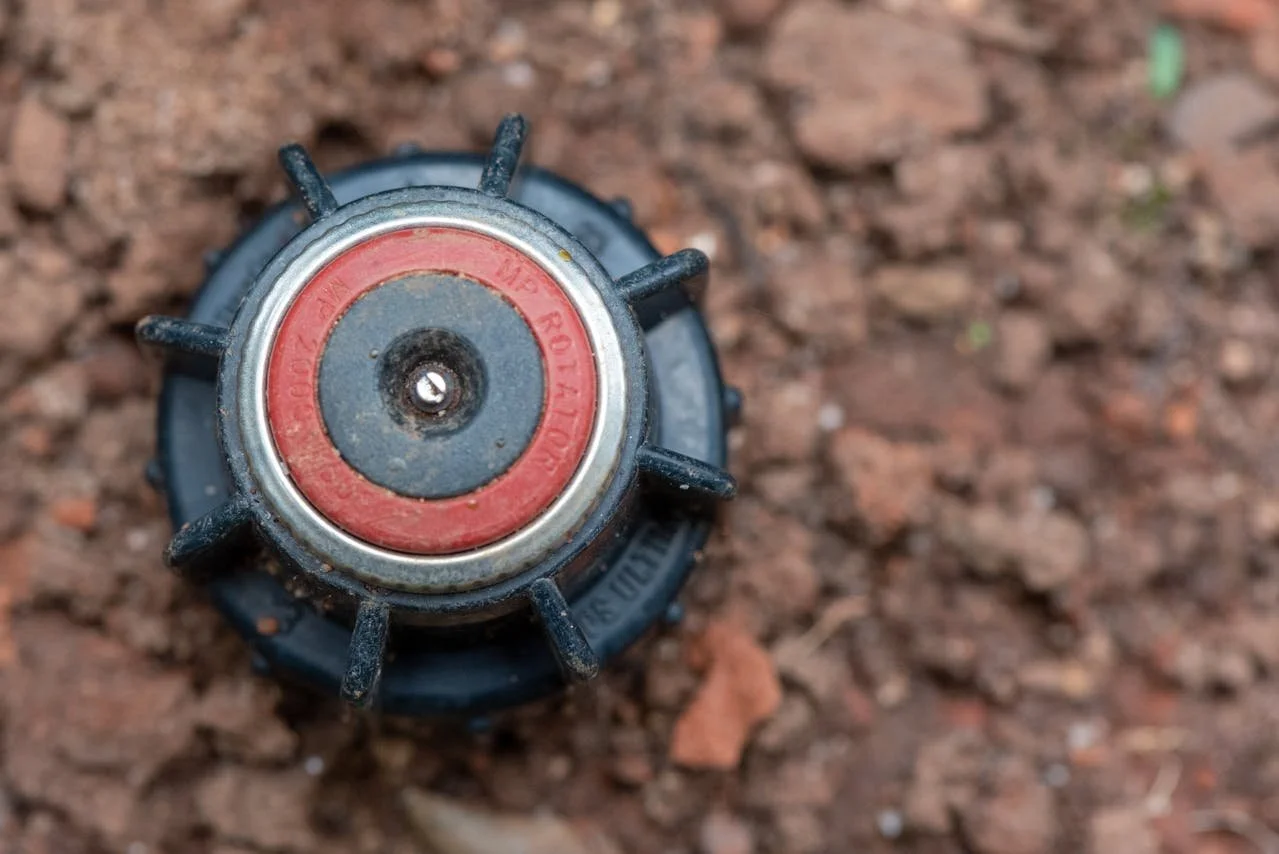
Sprinkler on the edge of a lawn
Worry Less About Watering Turf: Go Native
You may be wondering: “Is it even worth maintaining my grass lawn year after year with so much to consider?“ If you are, you’ve come to the right place. Eurasian turf lawns can look amazing but they require a substantial amount of maintenance. As landscape designers, we want to make your yard look beautiful and easy to maintain without the hassle of getting things down to a science.
We have had many clients ask us about natural lawns. While there isn’t a 1:1 replacement, there are a few close alternatives if we get creative. Before we dive in, let’s talk about some of the reasons why turf grasses are suboptimal.
Why Move Away from Eurasian Turf Grasses?
As we mentioned before, turf grasses look nice but there are several drawbacks that make them less than ideal.
As you probably already know, turf grasses are a money pit. They require substantial amounts of water, expensive chemicals, and landscaping fees or your own hard work. Traditional lawns are the number 1 cash “crop” in the United States. That means we spend more money growing turf grasses than food crops.
Species such as Bermuda grass are actually invasive weeds! If you have this grass, it can actually get into other areas of your landscape if the runners are able to grow freely. Additionally, it’s possible for invasive turf grasses to damage the broader ecosystem by outcompeting native species and harming pollinator populations.
Having a single turf grass as the base of a lawn also creates a monoculture. This makes it easy for pests such as armyworms to decimate your grass in days to weeks, forcing you to buy pesticides and expensive sod or grass seed to replenish dead and dying areas.
Learn more about America’s turf grass history here: https://blogs.ifas.ufl.edu/okaloosaco/history-of-turf-grasses/
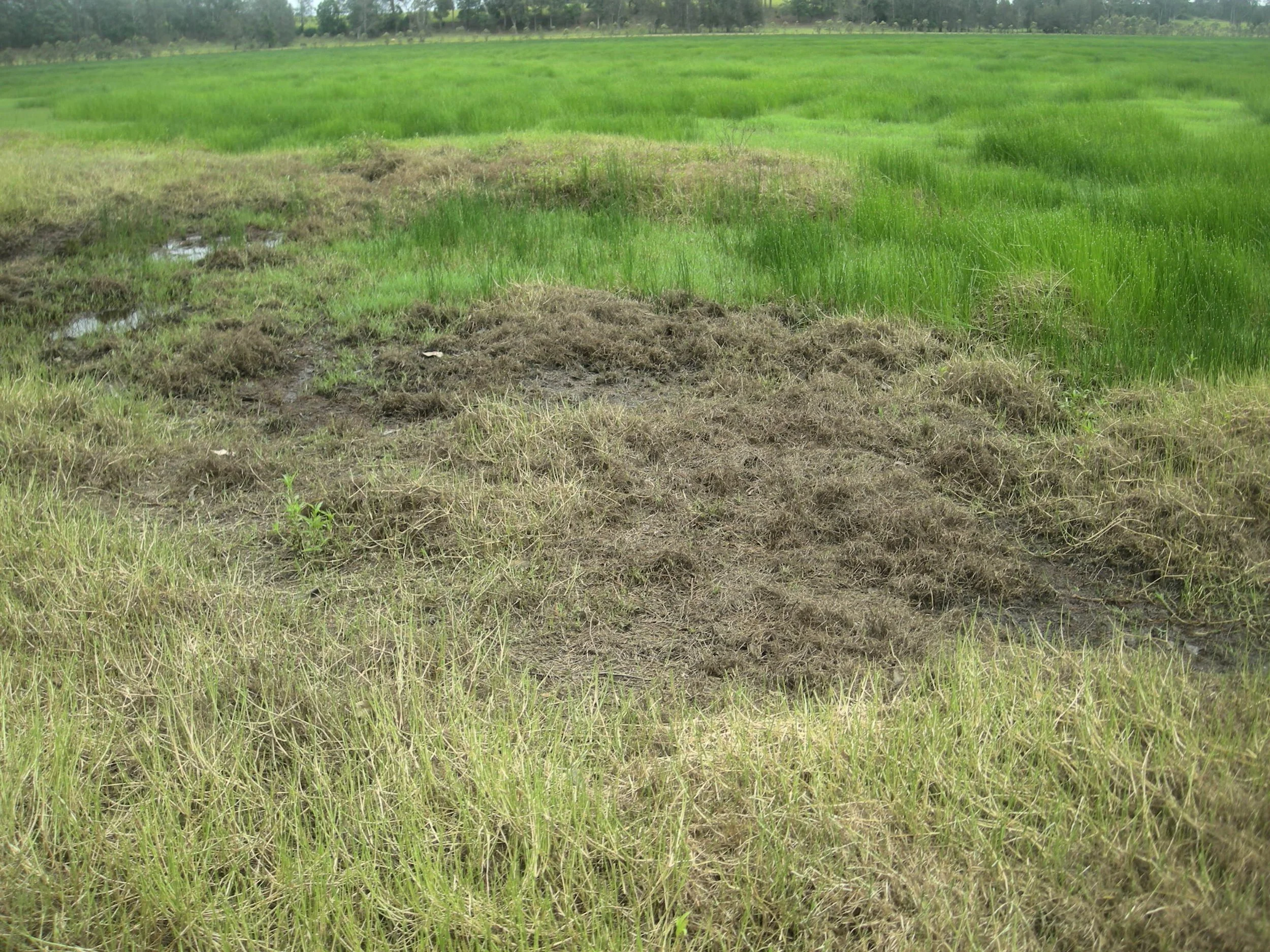
A severe case of armyworm grass damage
Close Alternatives for Alabama Turf Grass Lawns
Sedges
The most common alternative to turf grasses are native sedges. In a nutshell, sedges are grass-like flowing plants that form spreading colonies. Native sedges, like Carex pensylvanica, are great because they stay green year-round and have deep roots that handle heat well. They can take some foot traffic as a lawn, but they do grow slightly taller than regular turf grass. Since they don’t handle frequent mowing, they are best for lightly manicured look that creates a soft, flowing, meadow-like landscape.
There are two main things to consider before switching. First, sedges are still a monoculture. If a specific disease hits your yard, you could lose the whole lawn at once. Second, sedges don’t grow well from seed. You have to install them as individual plugs. To get a full look quickly, you need to plant them close together, which can make the upfront cost higher than traditional grass. You’ll need to budget around $5.50-6 per square foot.
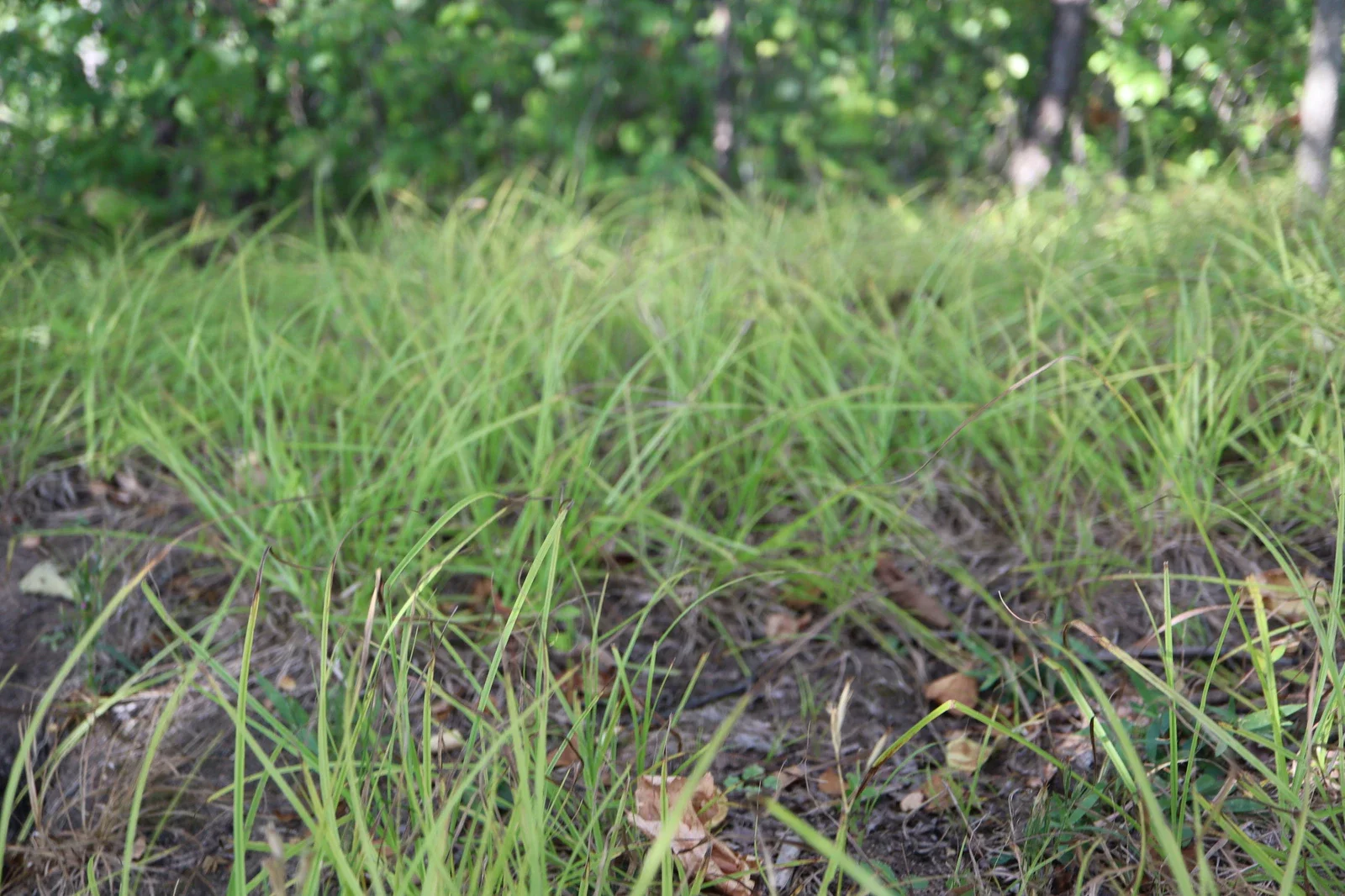
Close-up of Pennsylvania Sedge
Moss
Most folks think of moss as a weed that gets into the cracks of your concrete that ends up being on eyesore. However, moss actually works as a great lawn in shady, damp areas. Moss is a good choice because it stays low to the ground and handles heavy foot traffic well. As long as the soil stays moist, your moss yard will stay beautiful and green year-round. It only grows a few centimeters tall, so you never have to worry about mowing it like a traditional lawn.
Setting up moss turf is simple with a moss slurry. You just blend live moss with buttermilk and spray or paint it over your soil. This makes it easy to cover large areas quickly. The main trade-off is the maintenance. To keep a moss lawn happy and healthy in Alabama, you have to water it regularly to prevent it from drying out in the sun.
Discover more here: https://conservationdistrict.org/2018/the-benefits-and-ecology-of-a-moss-lawn.html
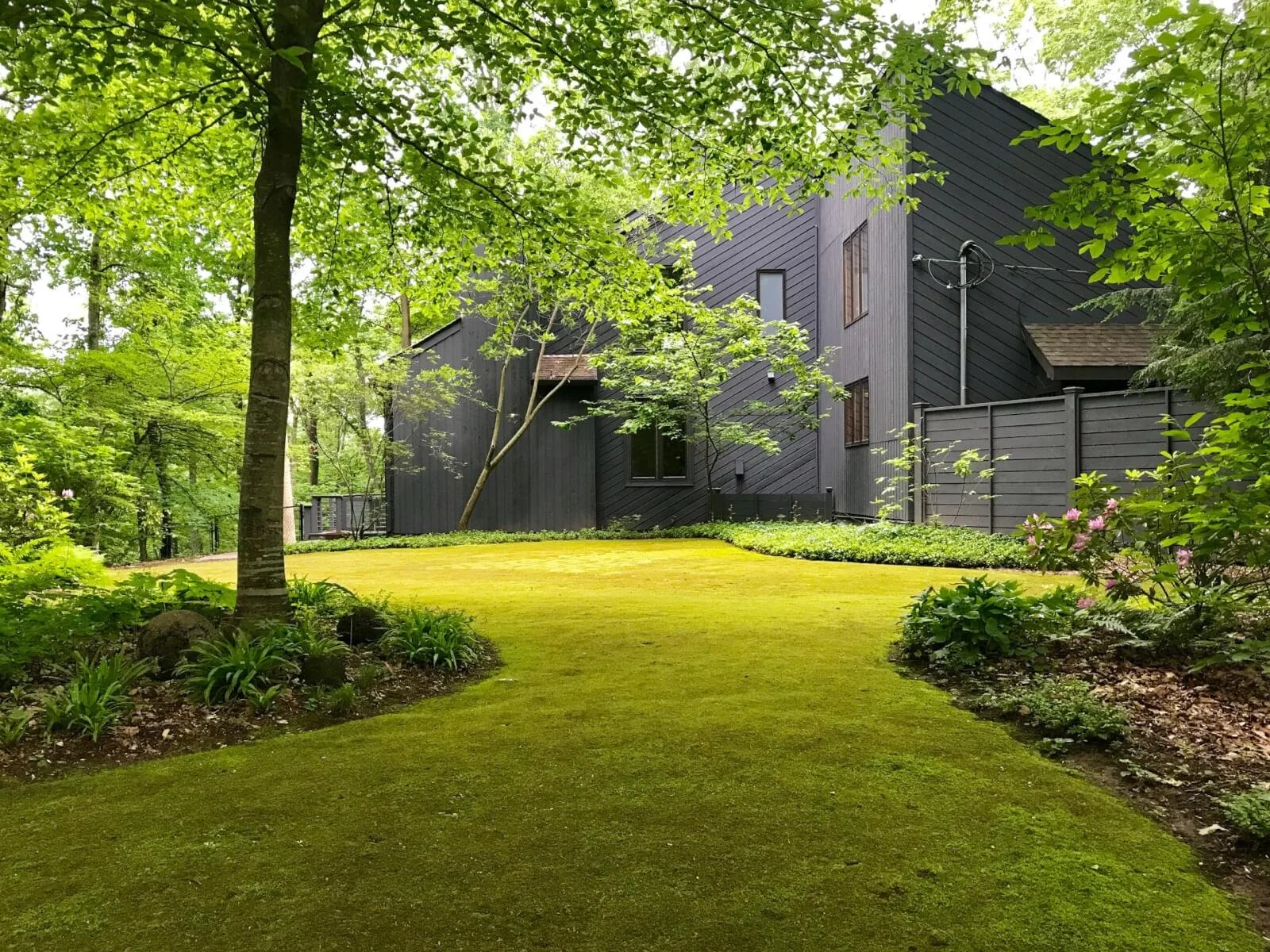
An example of a backyard utilizing moss as turf
Yarrow (In Ideal Conditions)
The last two suggestions are fairly common. Now, let’s get into some lesser known alternatives if you’re curious to learn more!
Common yarrow is a versatile turf grass replacement because it stays green most of the year and thrives in both full sun and deep shade. It is very hardy and grows in almost any soil type found in the state. Its deep, fibrous roots act like an anchor, helping the plant survive long droughts and heat waves while handling moderate foot traffic.
The main issue with yarrow as a lawn is its vertical growth potential. Sometimes growing up to 2 feet tall. While we have seen some populations that stay short, only a couple of inches tall, it can be hard to predict how large it will grow in any lawn. It can be cut back but it does not respond well to a consistent mowing schedule. Yarrow would make a great option for backyard lawns or front lot sections for rural properties.
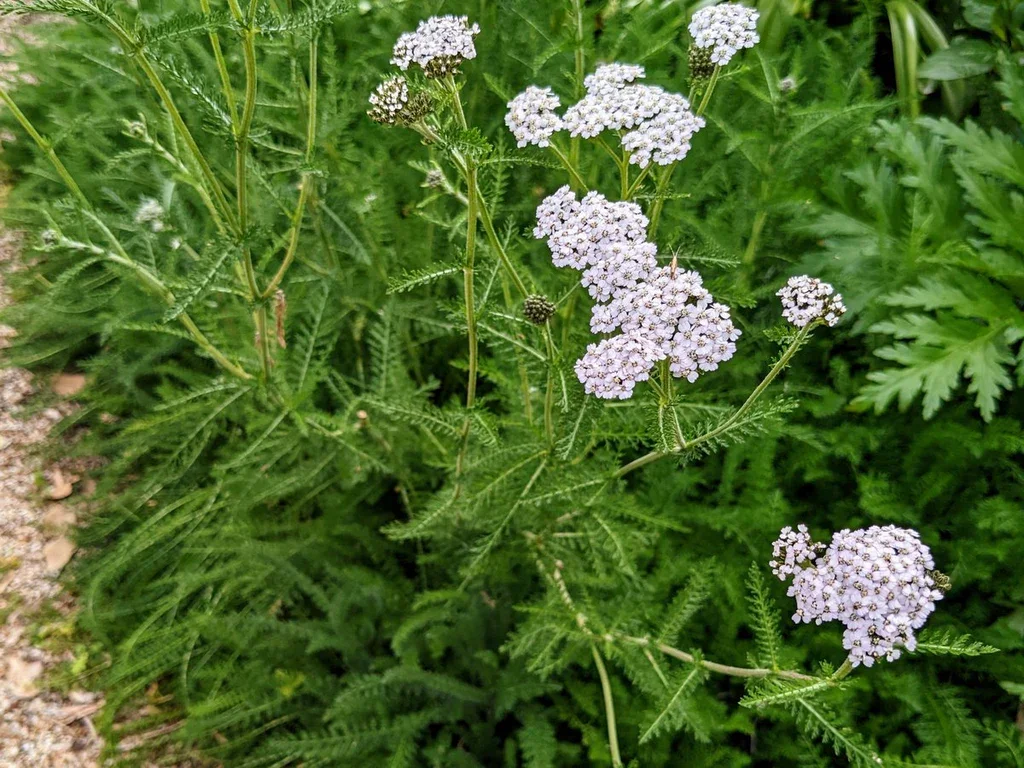
Beautiful Yarrow flower blooms
Common Blue Violets
Yes, we’re recommending a weed, but a weed is just a flower growing somewhere we don’t want it, right? Blue Violets are one of the best options for a native lawn! They naturally grow from seed and spread through underground rhizomes, making them incredibly hardy. They thrive in everything from full sun to full shade, so they fill in those annoying bare spots where regular grass usually dies off.
The best part is how low-maintenance they are. They stay short naturally, so you rarely have to mow. Since they are drought-tolerant, you don't have to waste time or money on watering. Plus, they handle heavy foot traffic well, making them a functional choice for a backyard.
Bonus: Did we mention that they are a host plant? That means you'll have butterflies all spring and summer long! Not only that, but the blooms are edible. Unlike Bermuda grass, you can actually have a lawn you can eat.
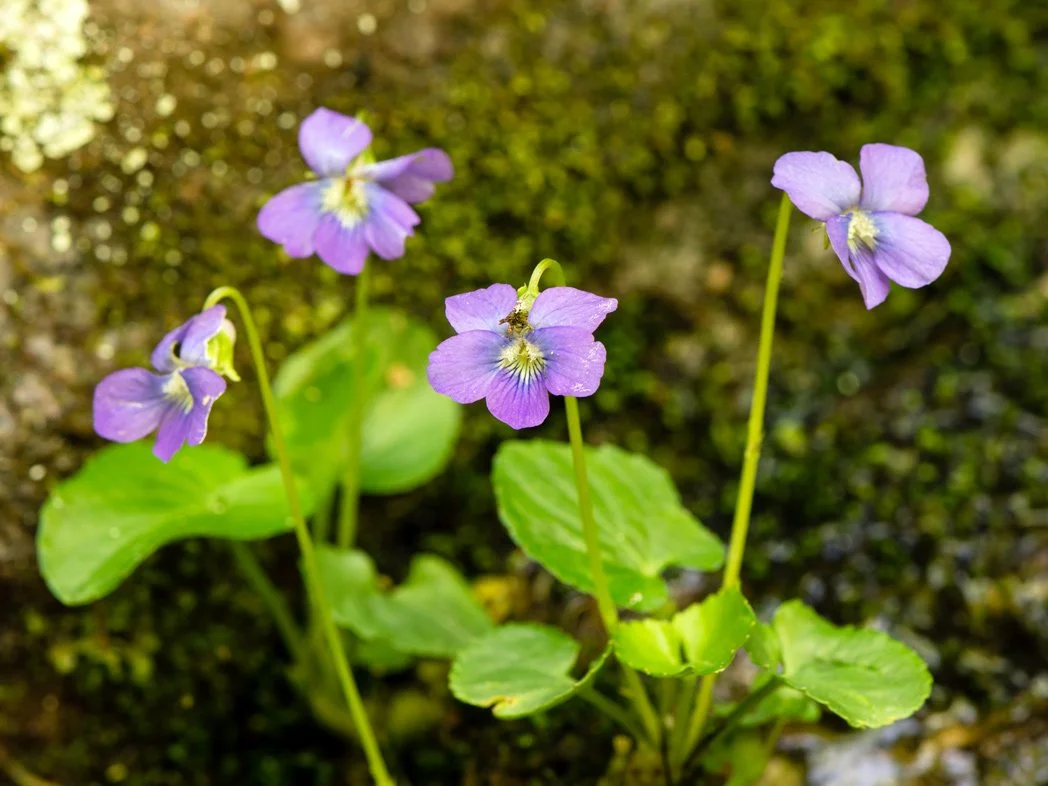
Not too shabby for a weed: Common Blue Violets
Heller's Rosette Grass
You probably haven’t heard of Heller’s Rosette Grass before. However, you’ve probably seen it as it commonly grows alongside turf grass and is treated like a weed. It naturally stays under a couple of inches tall and slowly spreads through clumps and above-ground runners. Like our other picks, it can tolerate compact soils and varying levels of sunlight. It’s tough and can handle heavy foot traffic as well.
We’re not quite sure why this wasn't the top pick for American yards. Finding seeds for this grass can be a challenge, but please do reach out if you are interested because we might have a source!
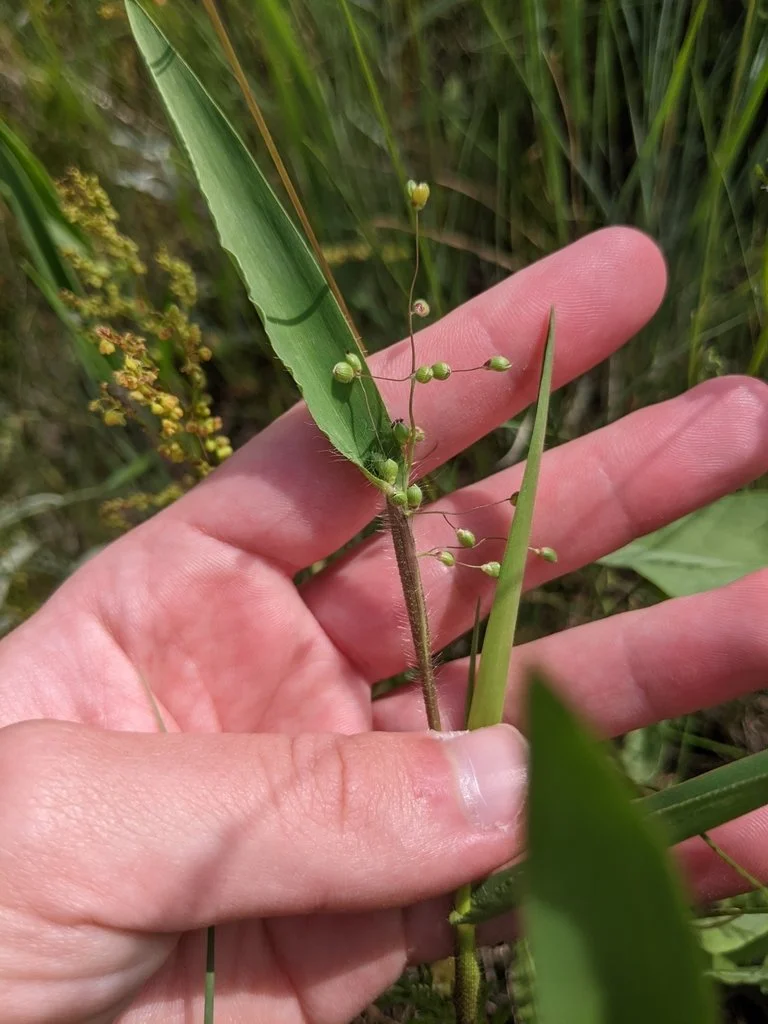
Heller’s Rosette Grass being examined
Lyreleaf Sage
Lyreleaf Sage is an amazing ground cover option that probably already grows in your lawn. While it can get tall while blooming, the foliage stays at the base of the plant, close to the ground. If you don't want a yard full of flowers, you can easily cut the bloom stalks off.
What makes this plant special is the color variation in the leaves. Depending on your soil and sunlight, you will see colors ranging from vibrant green to deep purple. It looks very similar to Ajuga, which is a common invasive ground cover, but Lyreleaf Sage is a native choice that belongs in an Alabama landscape.
It thrives in various conditions and provides a pop of color that traditional turf grass lawns just can't match.
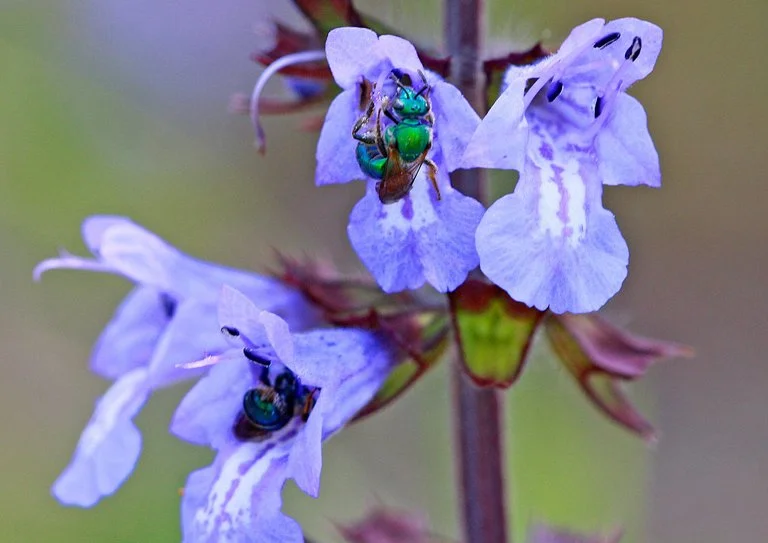
Sweat bees enjoying the nectar of Lyreleaf Sage flowers
Elephant’s Foot
Elephant’s Foot is a fantastic choice if you want a plant with large leaves that stay low to the ground. While the bloom stalks can reach 2 feet or taller, the main foliage stays flat and spreads quickly to cover bare spots.
This native plant is resilient and handles full sun to partial shade easily. It can even take light foot traffic and occasional mowing. Just make sure to keep your mower blades on a high setting so you don't damage the base of the plant. It’s a great way to add unique texture to your yard without the constant upkeep of traditional grass lawns during July and August in Huntsville.
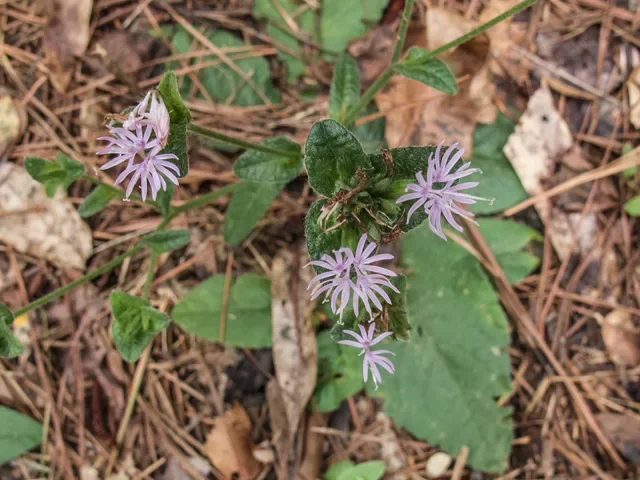
Elephant’s Foot growing healthy in pine straw
Antennaria
Antennaria are a genus of dainty native plants that form thick, carpet-like colonies. Most species prefer shady spots and stay very low to the ground, making them a great alternative to traditional grass lawns in the right environment.
These plants are generally low-maintenance, though they do appreciate extra watering during Alabama's dry Septembers and Octobers. While they can handle light foot traffic, they really do best in areas where they can grow undisturbed.
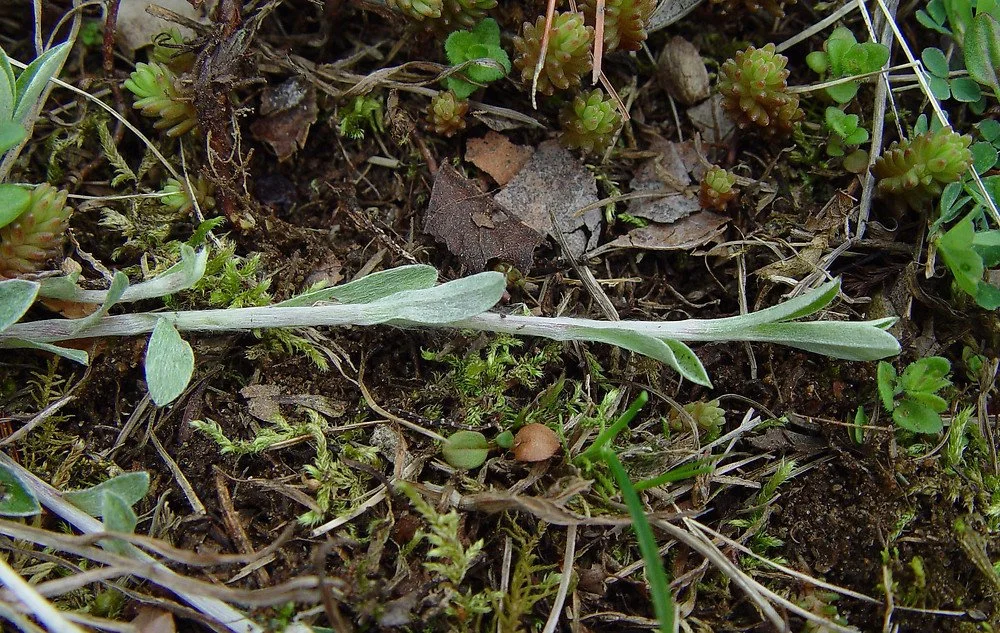
Close up of trailing Antennaria stem
Purple Love Grass
Purple Love Grass is a good choice if you don’t mind a look that is a little taller and more like field grass. It thrives in full sun and is tough enough to handle everything from sandy soil to clay. It spreads quickly and can tolerate medium foot traffic, making it a practical native alternative for standard grass lawns.
Its best feature is its color. During its blooming season, it produces soft, purple flowers. These blooms are so fine that they look like a low fog rolling over your landscape. It’s a great way to add a soft, even texture to your yard while keeping the maintenance low.
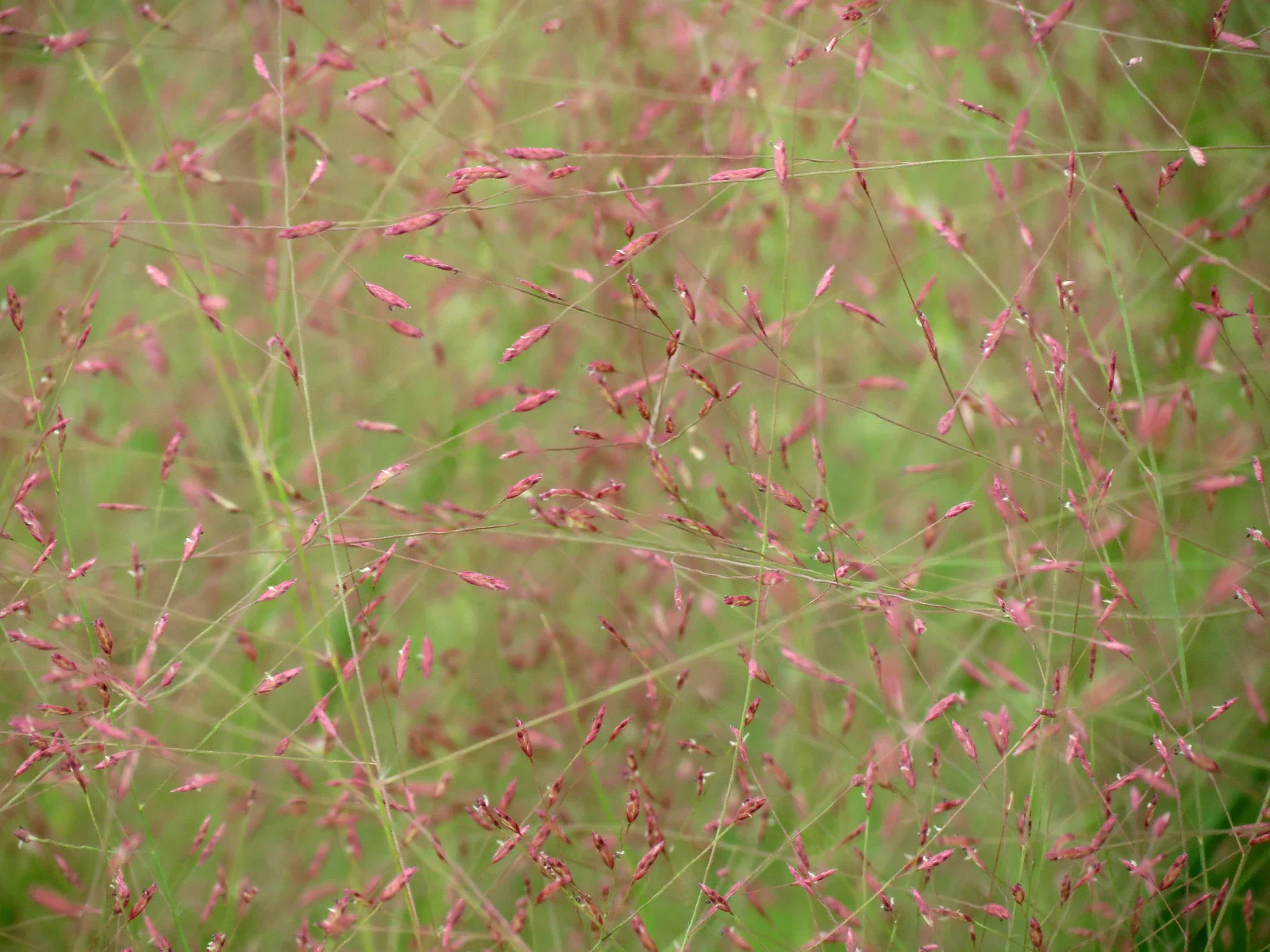
Cluster of slender, airy Purple Lovegrass
Creeping Phlox
Creeping Phlox is a great-looking native ground cover that you have probably seen in garden beds. It is known for creating carpets of colorful blooms every spring. It is a great way to add color to your landscape while using a plant that is native to Alabama.
To keep Creeping Phlox happy during a hot summer, you will need to provide a little extra water. While it is a hardy plant, it doesn't handle foot traffic well. It is best used in areas where it won't be stepped on, or alongside clear pathways where guests can walk. It’s a perfect, low-profile choice for adding beauty to edges or slopes in your yard. It’s the perfect ground cover to pair with pavers or stepping stones!
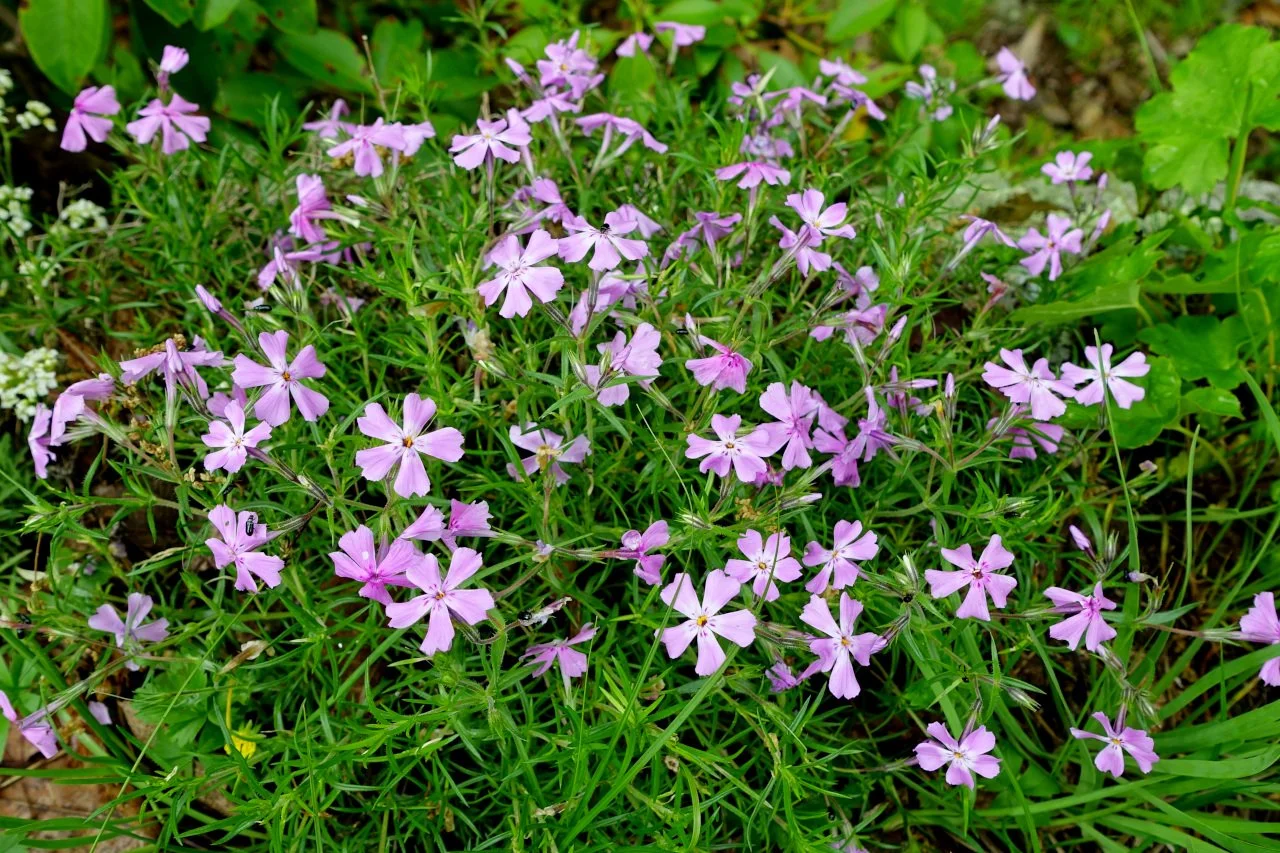
Beautiful Creeping Phlox Specimen
Wrapping Things Up
Using a mix of these plants is a great way to avoid a monoculture. Having different species makes your lawn much stronger and more resistant to diseases. By combining these native options, you get better coverage and a much lower chance of your entire yard dying off during a drought.
Feel free to experiment and find a mix that works best for your specific yard. Just remember to consider the pros and cons of each species, like how much sun they need, if they can handle being stepped on, and how much they can be mowed.
Whether you want to keep your traditional grass lawn or switch to native plants, Foraging Ahead is here to help. We can design around your existing turf grass or help you transition to a full prairie garden. Our goal is to help you re-evaluate your landscape to save you money and cut down on maintenance. Give Aaron a call today to transform your lawn and bring it back into harmony!