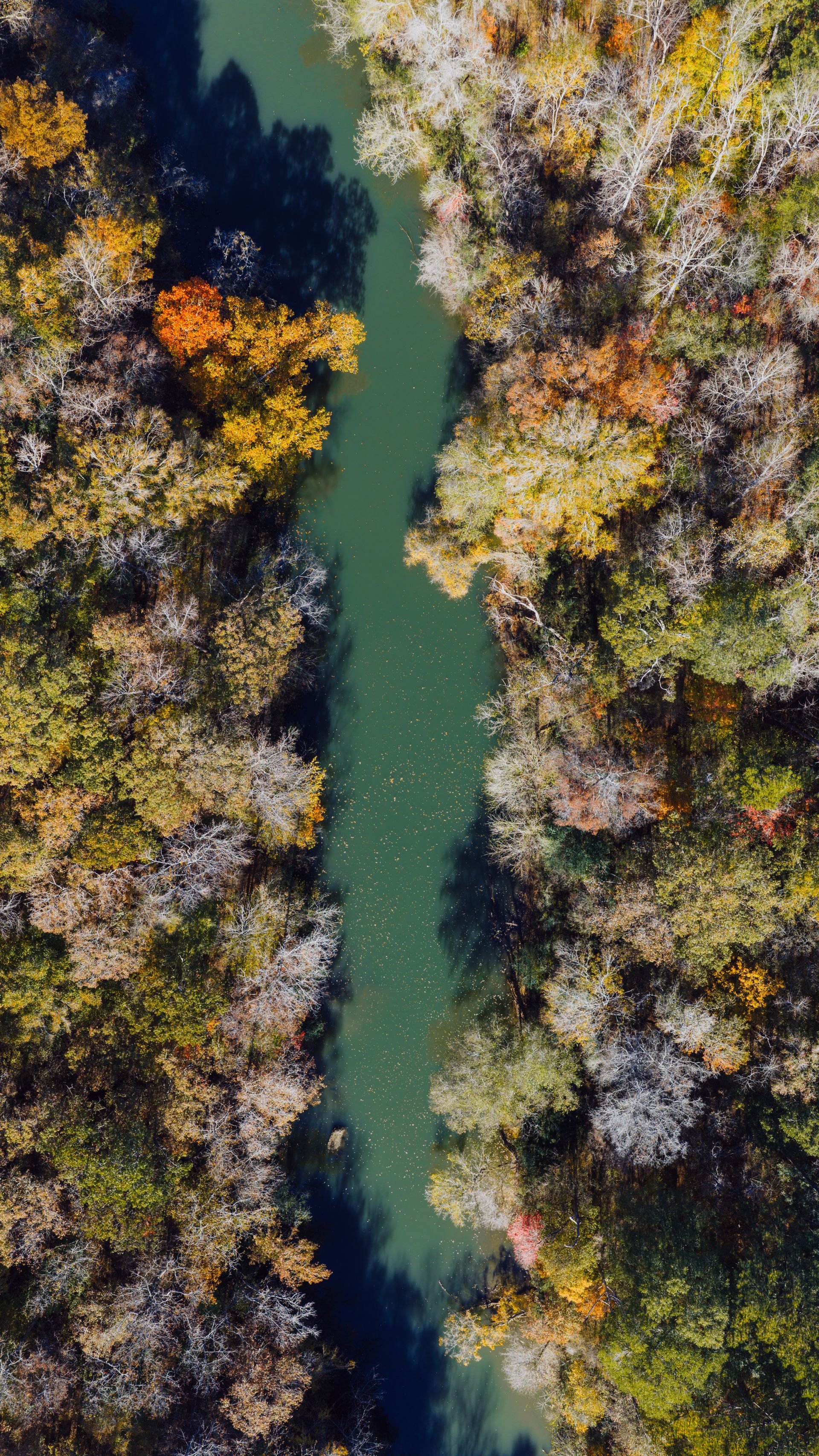
Beautiful aerial drone shot of the Cahaba river in autumn
As the leaves begin to change across the Tennessee Valley, most homeowners start packing away their gardening tools. However, fall is actually one of the best times of the year to plant in North Alabama! In this article, we’ll explain why fall planting works so well in Huntsville and surrounding areas, and we’ll spotlight five native plants that bring color, pollinators, and wildlife to your landscape all season long.
Why is Fall the Best Time to Plant in North Alabama?
In the Huntsville and North Alabama region (Zone 7b and 8a), fall offers the perfect combination of warm soil and cool air. Warm soil encourages strong root growth, while cooler temperatures reduce heat stress on new plants. According to the Alabama Cooperative Extension System, the planting window for trees and shrubs runs from October through January, with early fall being the most desirable. Plants that go in the ground this fall will have all winter to establish their root system and will be ready to thrive when spring arrives.
Benefits of Fall Planting in Huntsville
Cooler temperatures reduce heat stress on new plants and gardeners
Warm soil promotes fast, deep root establishment
Fall rains reduce watering requirements
Lower pest and weed pressure
Plants are established before the summer heat returns
Next, we’ll take a look at five of our favorite native plants for fall landscape design in North Alabama.
1. American Beautyberry (Callicarpa americana)
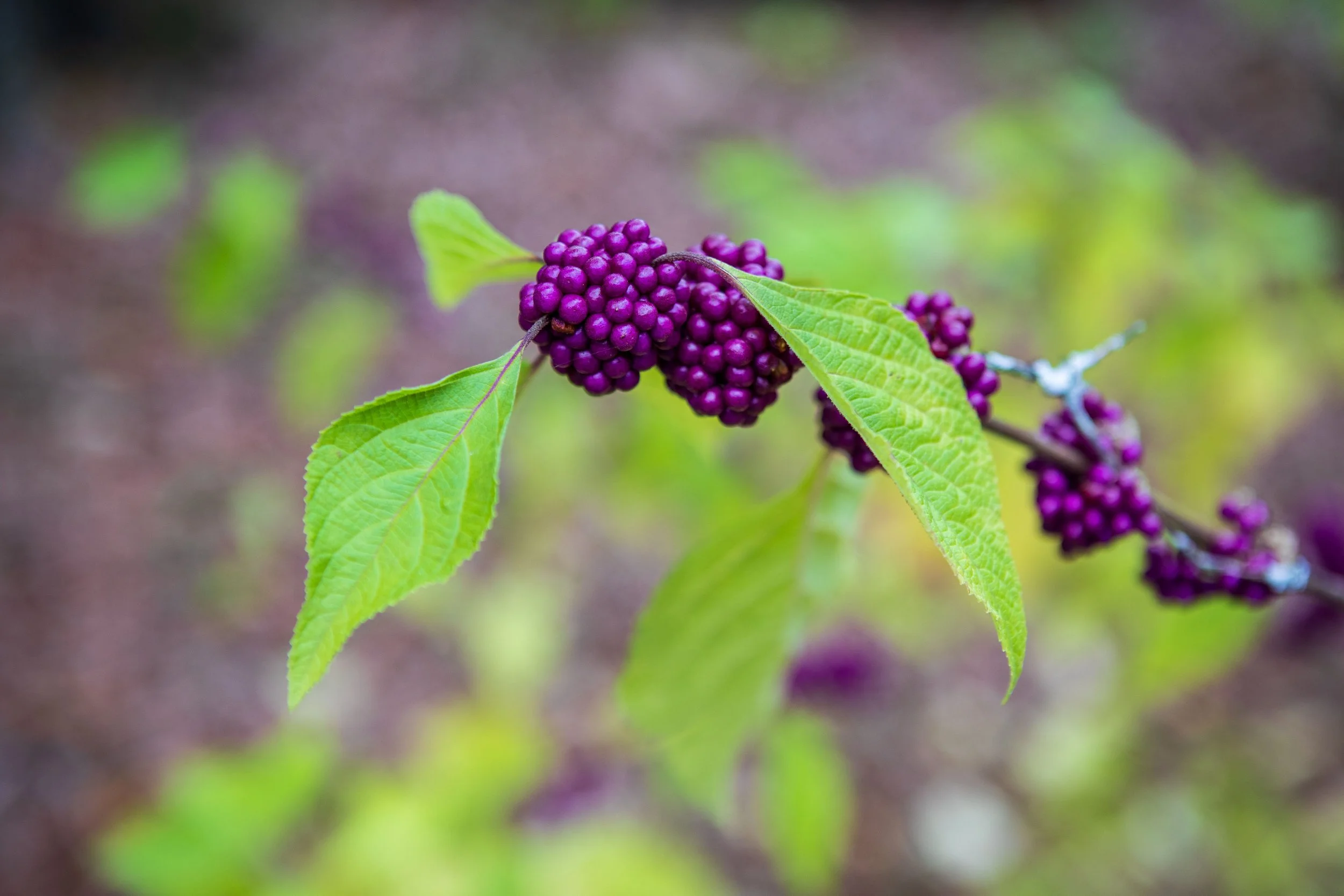
Native American beautyberry with its berries forming rings around the stem.
As the leaves begin to change into various hues of orange/brown and eventually drop, beautyberry enters its most stunning season! The beautiful purple berries of plants in the Callicarpa genus create a wonderful pop of color for the fall color palette.
Native vs. Non-Native Beautyberry
But make sure you get the right one! Two Asian species of beautyberry (Callicarpa dichotoma and Callicarpa japonica) are popular in nurseries and can be easy to confuse with our native species. Here’s how to tell the difference:
American beautyberry (native): Berries form tight rings that wrap all the way around the stem. The berries are edible and have traditionally been used to make jelly.
Asian beautyberry (non-native): Berry clusters sit off to the sides of the stem rather than circling it. These berries are not considered edible.
Why is Beautyberry Good for Landscape Design in Huntsville?
Bright purple berries provide fall and winter color
Berries last long into the winter, providing an important food source for overwintering backyard birds
Grows well in almost any sun exposure or soil type
Thrives in rain gardens and swales
Beautyberry grows best in consistently moist soil with part shade, which makes it a great choice for addressing drainage issues in your yard.
2. Aromatic Aster (Symphyotrichum oblongifolium)
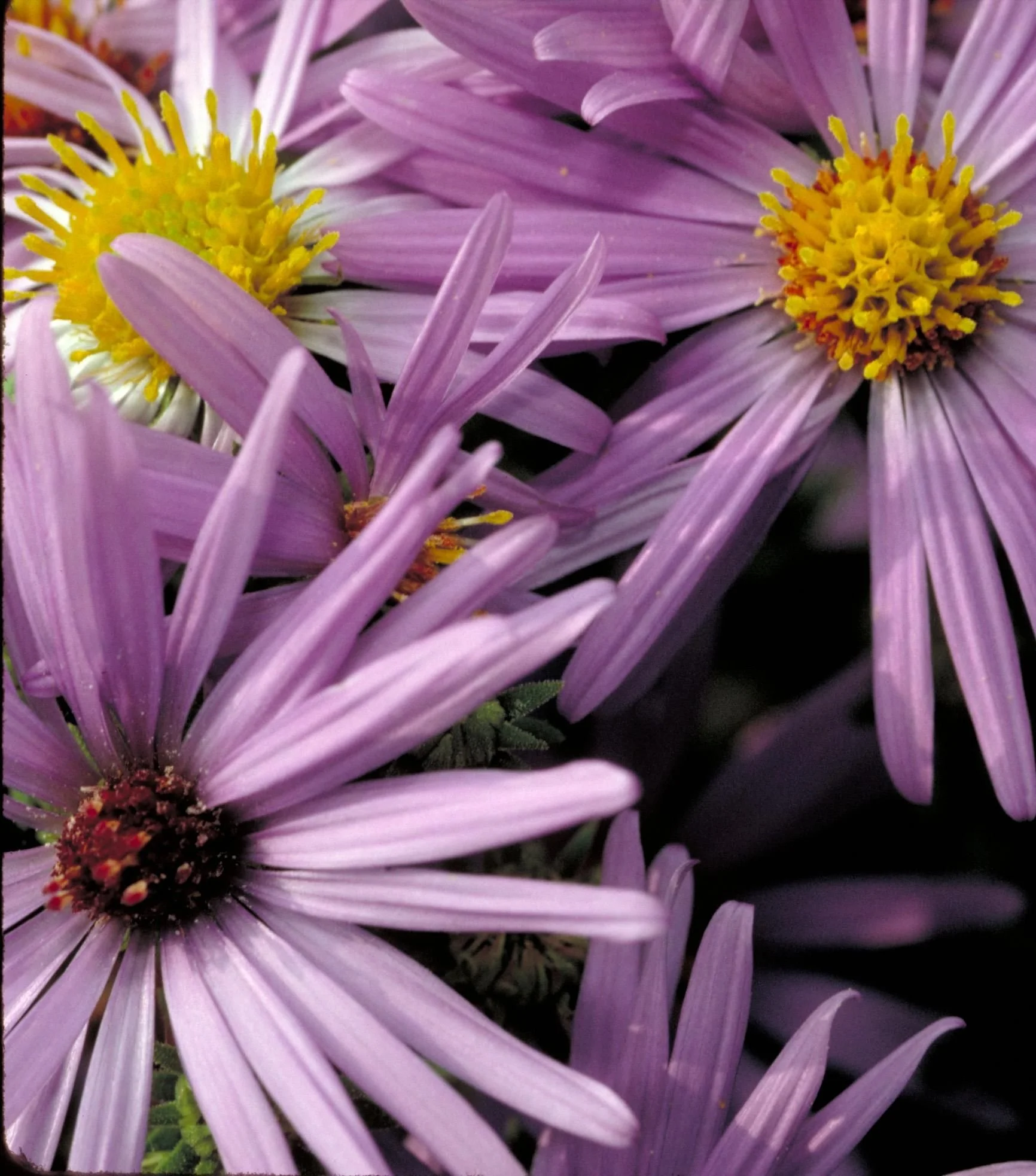
Aromatic aster in bloom.
Aromatic aster is a great fall perennial to replace the annual mums! Unlike mums, which most homeowners replace every year, this mounding perennial comes back bigger and fuller each fall. Covered in lavender-blue blooms, aromatic aster is a favorite of native pollinators and provides an important late-season nectar source.
Why is Aromatic Aster Good for Landscape Design in Huntsville?
Perennial alternative to annual fall mums
Wonderfully scented foliage
Deer and rabbit resistant
Major attractant for native bees and butterflies
Aromatic aster grows best in full sun with average soil moisture.
3. 'Fireworks' Goldenrod (Solidago rugosa 'Fireworks')
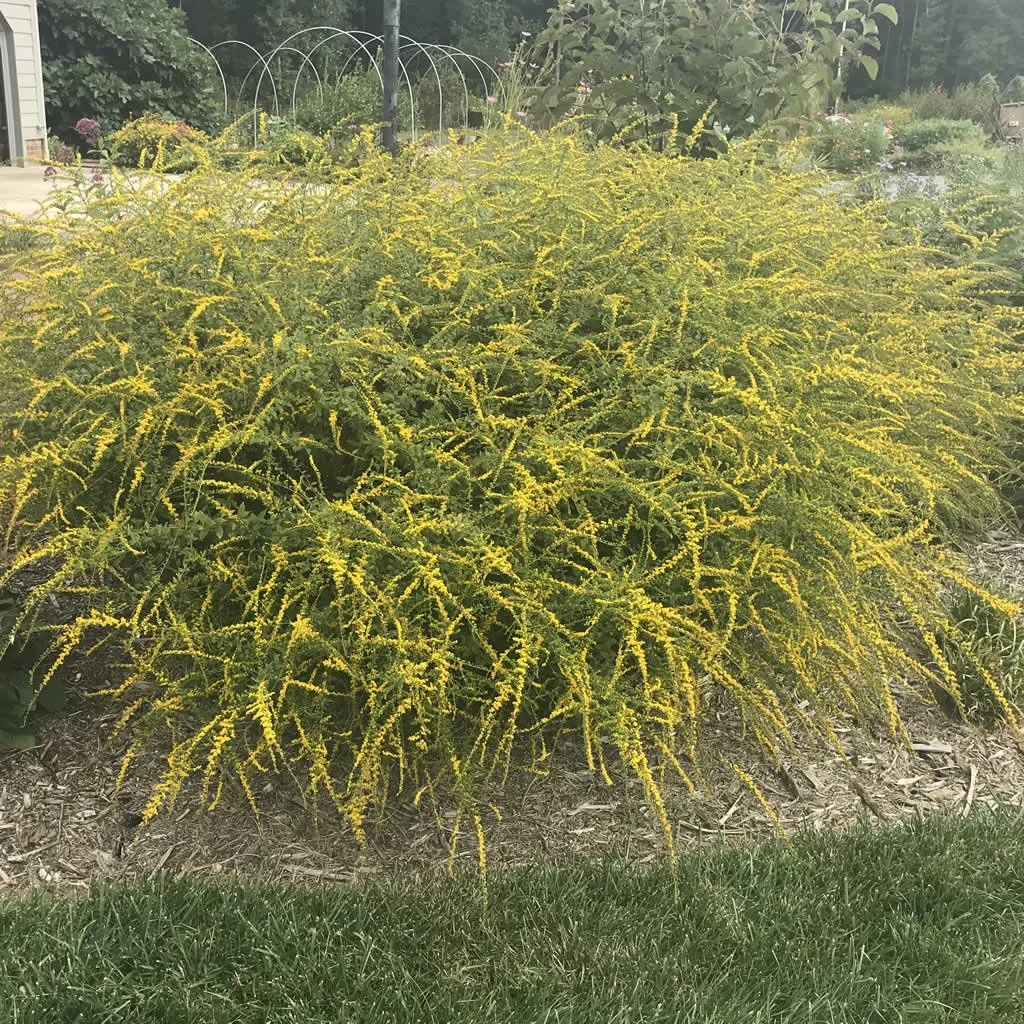
Fireworks Goldenrod in the garden
'Fireworks' goldenrod is one of the best goldenrod cultivars for a garden setting! A mounding perennial, this plant lives up to its name as beautiful golden stalks appear to shoot out of the base of the plant.
Does Goldenrod Cause Allergies?
Goldenrod gets a bad rap as the cause of seasonal allergies, but this is a common misconception! Goldenrod has heavy, sticky pollen that is carried by bees, beetles, and anything else that visits the flowers. Most people who experience fall allergies get them from ragweed, which is wind pollinated and blooms at the same time.
Goldenrod also has a long history as a tea plant. A tea made from the blooms and leaves makes for a wonderful fall drink, and herbalists have traditionally used it for seasonal allergy symptoms. If you’d like to try it, make sure the plant is properly identified and check with your doctor first, especially if you’re allergic to plants in the aster family.
4. Oakleaf Hydrangea (Hydrangea quercifolia)
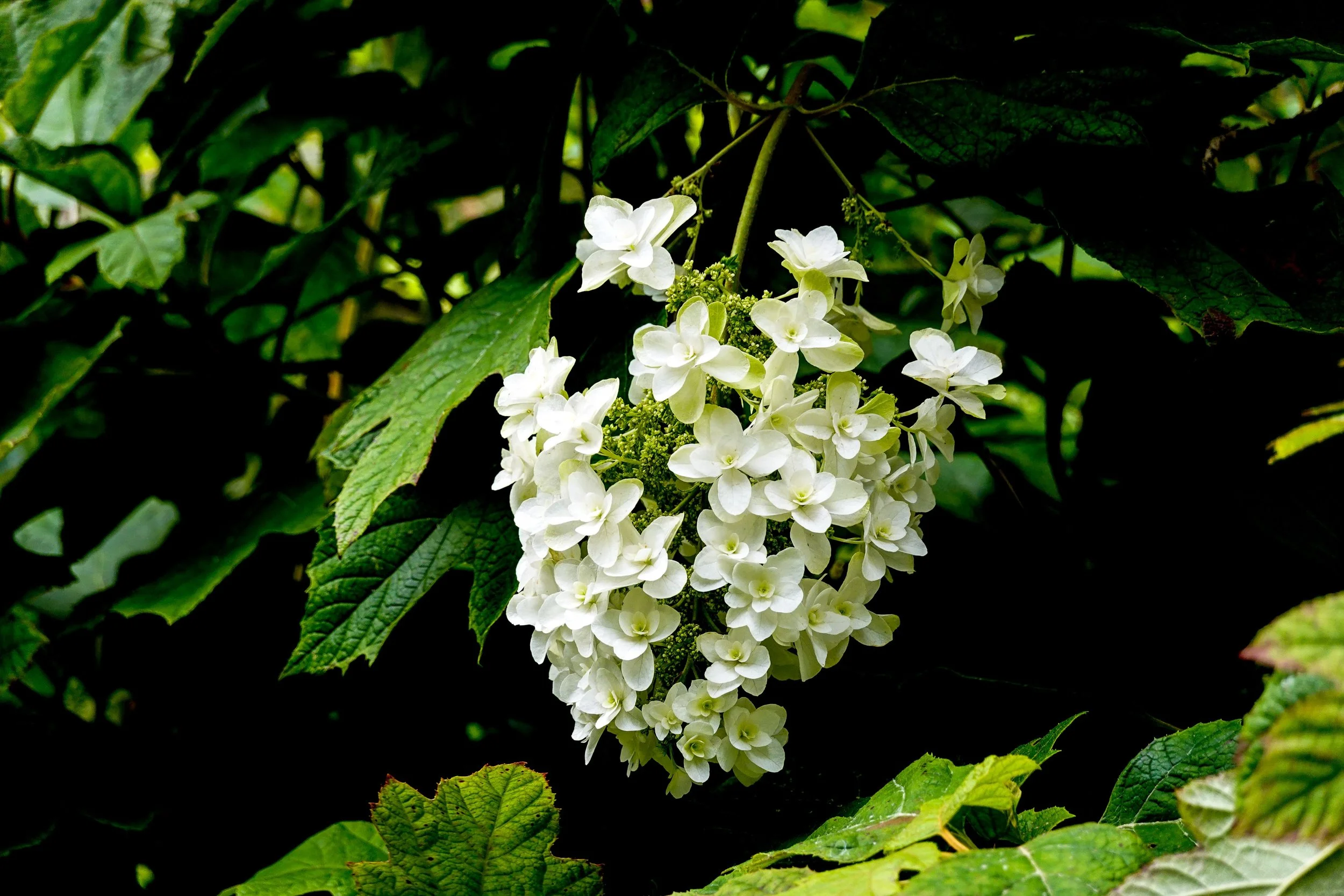
Oakleaf hydrangea in bloom.
Oakleaf hydrangea is Alabama’s state wildflower and a great native shrub for part shade to full shade. This plant delivers stunning white blooms that turn a pale red as they fade in the fall. We often see oakleaf hydrangea growing in natural woodlands across North Alabama, where its unique texture and impressive blooms attract all sorts of pollinators.
Why is Oakleaf Hydrangea Good for Landscape Design in Huntsville?
Native to Alabama and well suited to our climate
Thrives in shady areas where many plants struggle
Large, oak-shaped leaves add bold texture
Attracts a wide variety of pollinators
Oakleaf hydrangea prefers organic-rich soil in part to full shade.
5. Blue Sage (Salvia azurea)
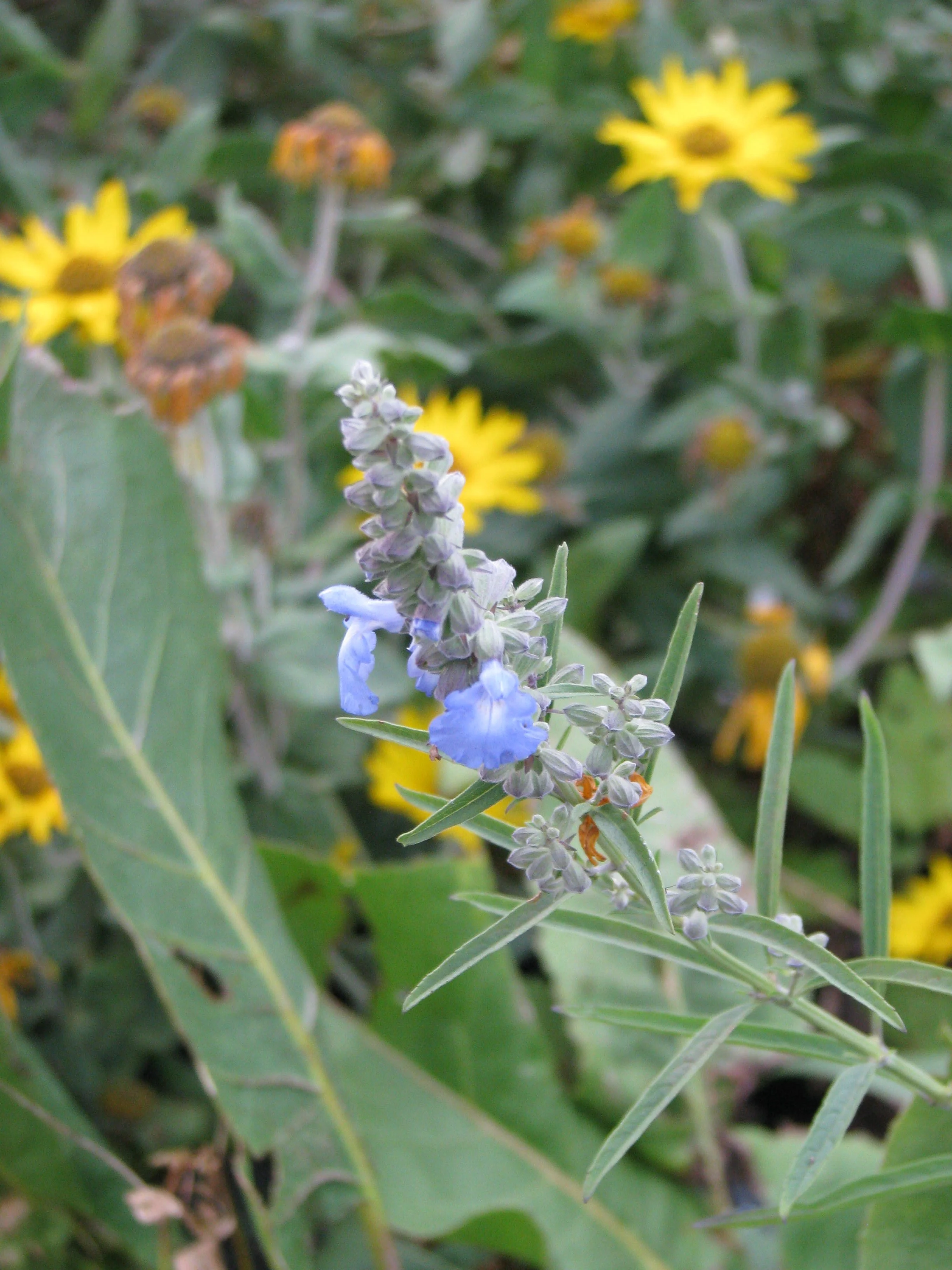
Native blue sage (Salvia azurea) in bloom. Photo: peganum, CC BY-SA 2.0, via Wikimedia Commons
Salvia azurea, or blue sage, is a shrubby perennial that will be covered in blooms from August through November, and sometimes even later than that! At up to 5 feet tall, this plant supports a wide variety of pollinators and is great at attracting late-season butterflies to your yard.
Blue Sage Growing Requirements
Blue sage does best in full sun but can tolerate partial shade. This plant prefers rocky, sandy, well-draining soil with consistent moisture. Once established, it becomes very drought tolerant.
How to Plan a Fall Native Landscape in North Alabama?
Before you start planting, it’s important to have a plan. When designing a fall native landscape in Huntsville, consider:
Sun exposure: Beautyberry and oakleaf hydrangea thrive in shady spots, while aromatic aster and blue sage prefer full sun.
Drainage: Low, wet areas are perfect for rain gardens and swales, while dry slopes suit drought-tolerant plants.
Soil: A soil test through the Alabama Cooperative Extension System will tell you exactly what your soil needs before you plant.
Year-round interest: Combine plants that peak in different seasons so your yard always has something to offer.
Want to Learn More About Fall Native Landscape Design?
Foraging Ahead is Huntsville Alabama’s choice for natural landscape design with beautyberry, goldenrod, and other native plants. Our expert landscape designer, Aaron Stiles, can provide free estimates and work with you to create a beautiful yard using the best methods available. Ready to get started? Click the link below to start your landscape design journey.