
Top 38 Spring Flowers for Landscaping in Alabama
Alabama is known for its warm to hot springs and small number of below freezing days. In fact, our springs feel more like summer most of the season and begin quite early meaning flowering plants can be enjoyed as early as mid-February. From the beautiful Blue Mist Flower to the towering Magnolia tree, there’s no shortage of options. In this guide, we will break down the top 38 spring flowers for use in landscaping and gardening that we recommend in Huntsville, Alabama. We’ve formed this selection based on native interest, natural beauty, ease of maintenance, and habitat potential.
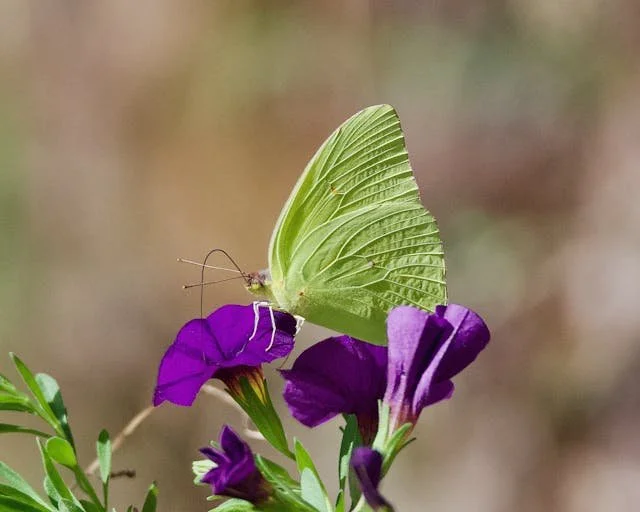
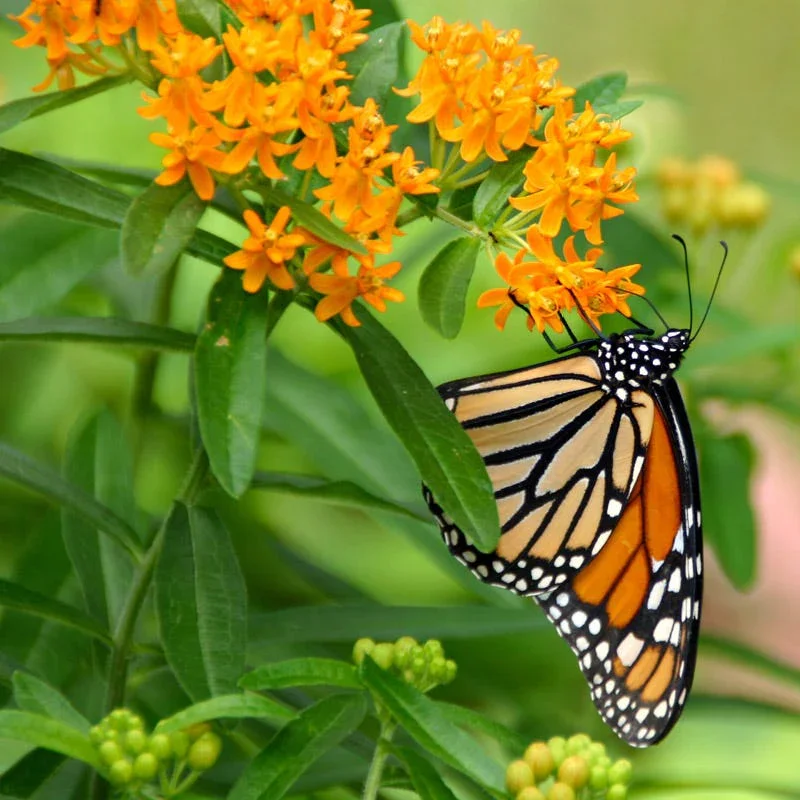
A butterfly drinking nectar from a flower in Athens, AL
A Selection of Native Alabama Flowers
Early Spring (February-March)
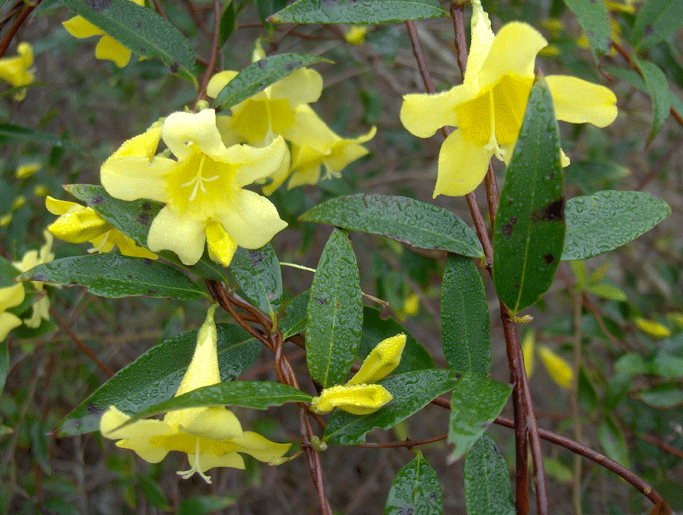
Carolina Jessamine (Gelsemium sempervirens): Carolina Jessamine may be the state flower of South Carolina but it is indeed native to Alabama. It’s a twining evergreen vine which does well anchoring and climbing up trellises. It has beautiful, bright yellow flowers that smell just as good. The vibrant blooms attract a range of potential pollinators such as honeybees, butterflies, and hummingbirds especially. It’s an excellent background cover for decks and railings. However, it must be confined with barriers of some kind or it can expand its real estate into undesired areas of your landscape.
Alabama Azalea (Rhododendron alabamense): This is the state’s wild azalea and one of the largest native varieties. It features fragrant white or pink-tinged blooms with a yellow center and is considered low maintenance, thriving in partial shade. As a flowering deciduous shrub, it does a great job at lining walls and the exteriors of structures. It’s large flower clusters are extremely eye-catching and provide a solid medium layer. We recommend transplanting from a nursery if possible for immediate landscape impact in shrub form. Like all native shrubs they can be an excellent way to provide bird nesting habits for Cardinals or Finches.
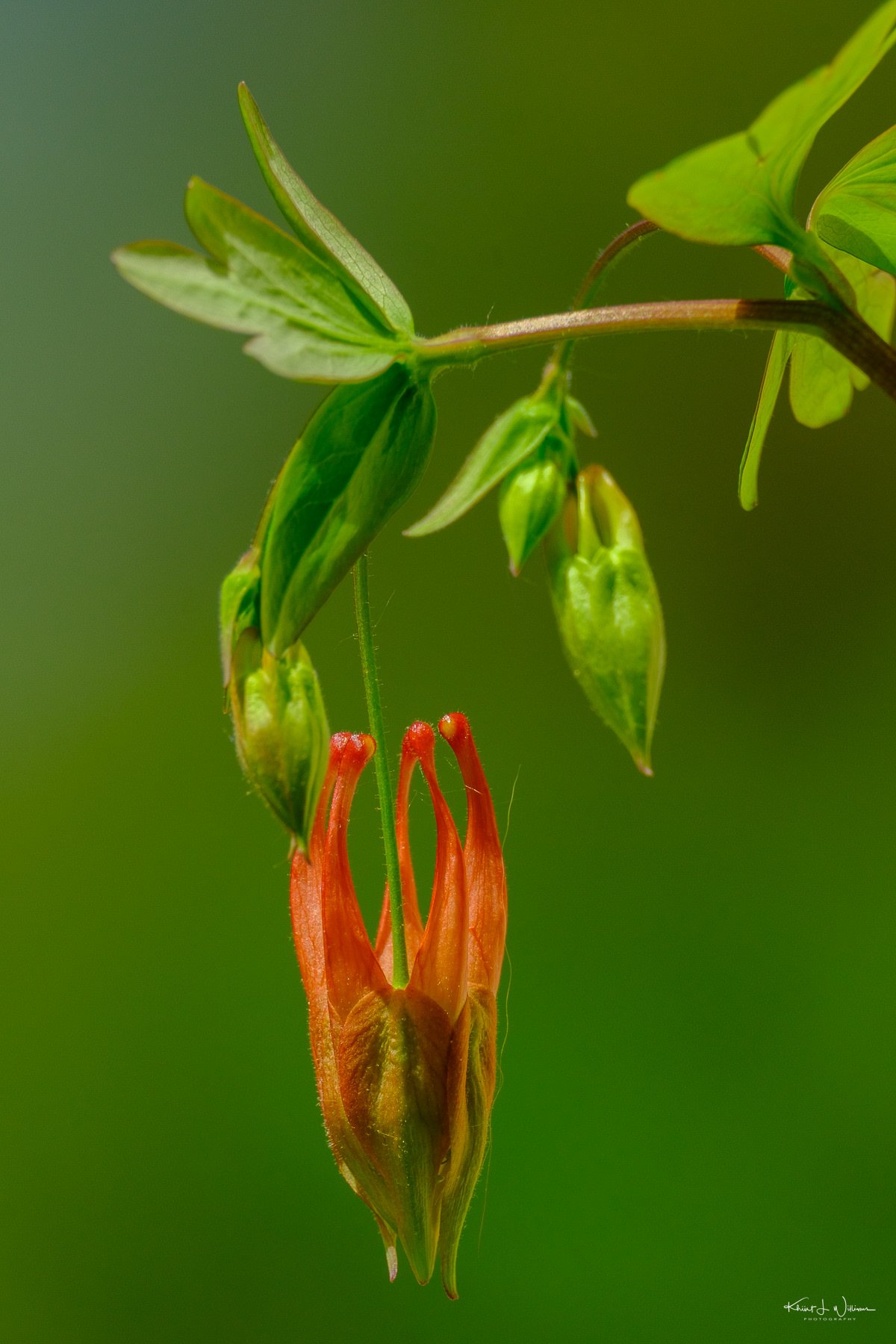
Eastern Columbine (Aquilegia canadensis): Native to northern Alabama, this plant produces majestic, dropping red and yellow tubular flowers on wiry stems. It is highly adaptable, easy to care for, and serves as an excellent habitat for hummingbirds. We love is because of their foreground interest and perfect food source for hummingbirds of all species. They make a landscape shine on their own.
Butterfly Weed (Asclepias tuberosa) This is a hardy, sun-loving perennial famous for its dense, vibrant orange flower clusters. It grows naturally across Alabama and is a critical host plant for Monarch butterflies, providing the primary food source for their larvae. Reaching a height of 1–3 feet, it functions as a reliable low-level interest plant for the front of sunny borders or rock gardens. It is exceptionally drought and heat tolerant due to its deep taproot, meaning it can handle the peak of a Southern summer without supplemental watering. Unlike other milkweeds, it lacks the sticky milky sap, making it cleaner to prune or handle. Once planted, it should be left undisturbed as it does not transplant well.
Foraging Ahead Expert Tip: Butterfly weed is not picky about soil and actually prefers sandy or gravely substrate. If you live around Huntsville there’s no shortage of this type of substrate. Try to find areas that aren’t ideal for other low-level interest wildflowers when direct seeding. Try sowing as early as possible to keep the seeds cool so that they can germinate properly (cold stratification).
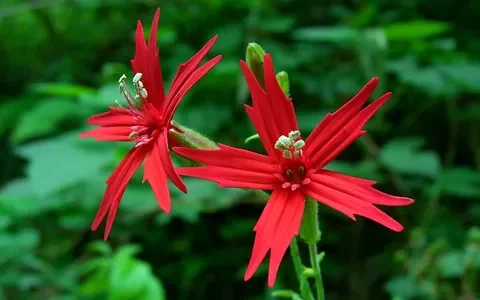
Fire Pink (Silene virginica): This is a lesser known but striking, low-level perennial known for its brilliant, star-shaped crimson flowers. It grows wild throughout Alabama’s open woodlands and rocky slopes, blooming as early as mid-February some years. Reaching a height of 12–18 inches, it is a high-impact choice for the front of a garden bed where its vivid red petals can stand out against green foliage. It is a primary nectar source for Ruby-throated Hummingbirds, who are easily drawn to its intense color during the day. Moths can be seen pollinating the flowers at night. While it prefers well-drained soil and dappled sunlight, it is remarkably hardy once established. Because it is relatively short-lived, it is best used in groupings or allowed to naturally reseed to maintain its presence in your landscape.
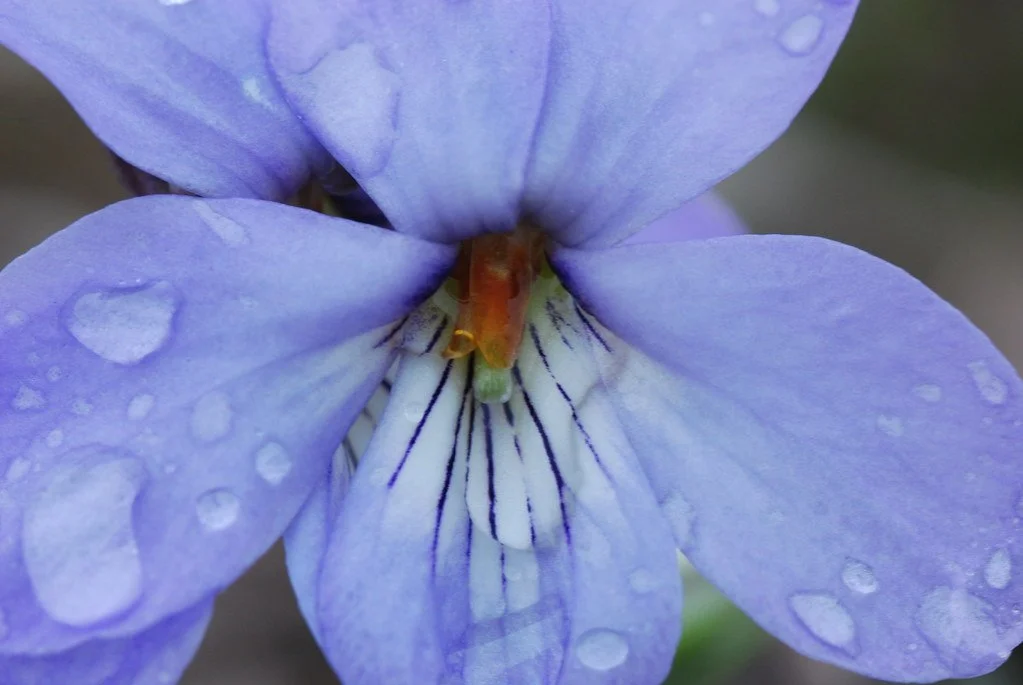
Bird’s Foot Violet (Viola pedata): This is arguably the most ornamental of Alabama’s native violets, easily distinguished by its deeply cut foliage that resembles a bird’s footprint. It produces large, bi-color or solid lilac-purple flowers with a prominent orange center, with blooms starting in late March. Reaching only 3–6 inches in height, it is a true low-level interest plant, perfect for the very edge of a garden path or tucked into well-drained rock gardens. Unlike many other violets, it thrives in drier, sandy soils and prefers full sun to light shade, making it a rugged choice for exposed areas. It is a critical host plant for the larvae of the Regal Fritillary butterfly and provides an early-season nectar source for native bees. We recommend planting it in groups to ensure its delicate profile isn't lost among larger, more aggressive landscape species.
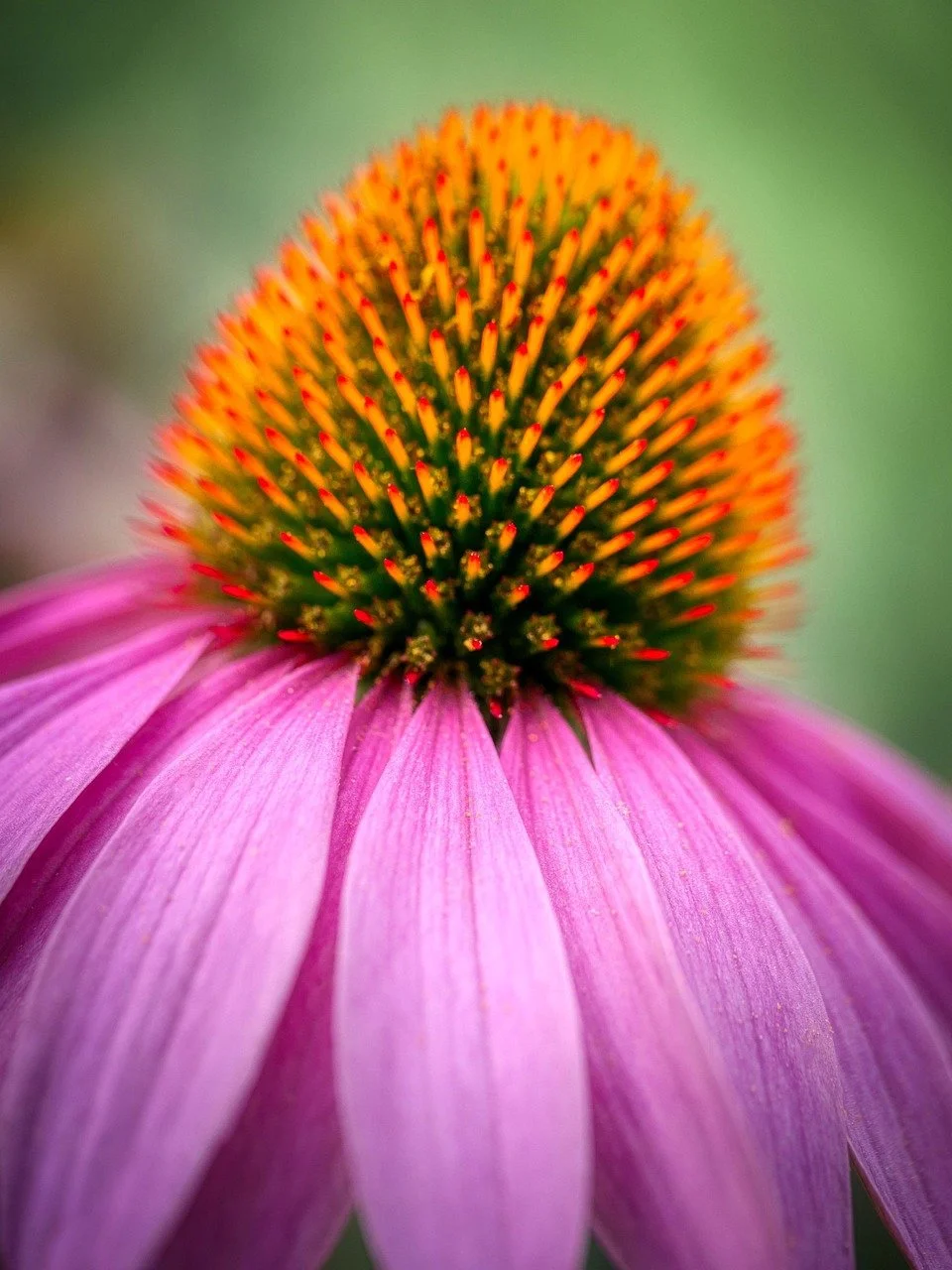
Purple Coneflower (Echinacea purpurea): This is a robust, sun-loving perennial that serves as a cornerstone for Alabama pollinator gardens. It features large, daisy-like flowers with drooping purple petals and a prominent, spiny orange-bronze center. Growing 2–4 feet tall, it provides a solid mid-level interest that holds its own against larger shrubs. It is exceptionally heat and drought tolerant, blooming from mid-summer into the fall. The dried seed heads are a primary food source for American Goldfinches in the winter, so we recommend leaving the stalks standing until early spring. It is highly resistant to pests and adapts well to most soil types, provided they are well-drained. Read more about them here.
Foraging Ahead Expert Tip: We absolutely love and highly endorse purple coneflowers as a mid-level landscape interest. Many guides will recommend deadheading the blooms once they’ve died, however, it’s better to keep them in place throughout the late fall and winter in Alabama. They serve as a great food source for finches and shelter for beneficial insects such as solitary bee larvae. We consider them nearly maintenance-free for homeowners that want to build a habitat.
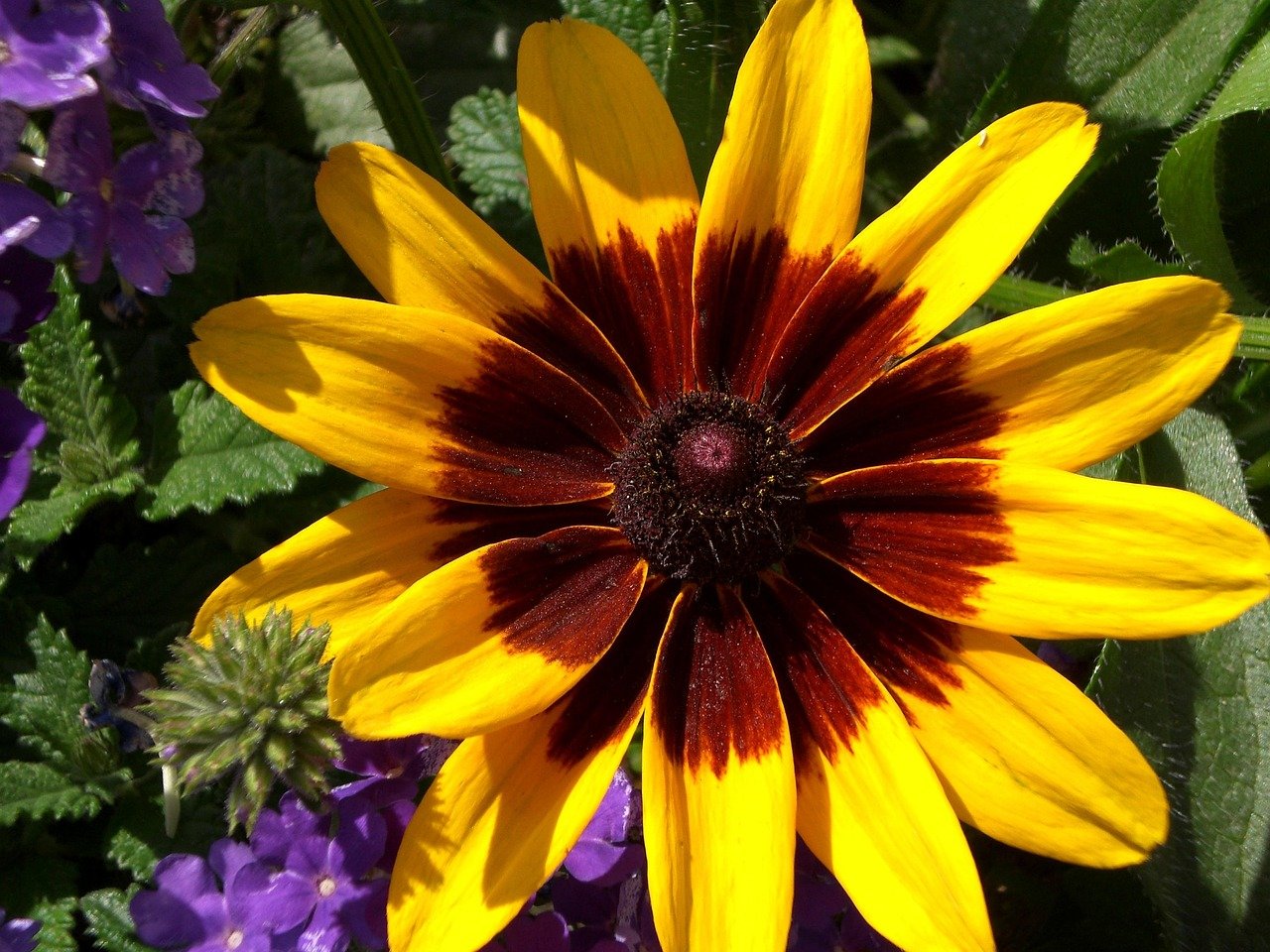
Black-Eyed Susan (Rudbeckia hirta): One of the most recognizable wildflowers in the state, this plant is prized for its bright yellow-gold petals and dark, coffee centers. It is a versatile low-to-mid level plant, typically reaching 1–3 feet in height. It acts as a prolific nectar source for a wide variety of butterflies and bees throughout the summer months. While often treated as a short-lived perennial or biennial, it reseeds aggressively, making it ideal for filling in gaps in a new landscape. It thrives in full sun and is tough enough to handle sandy soil and Alabama's high humidity.
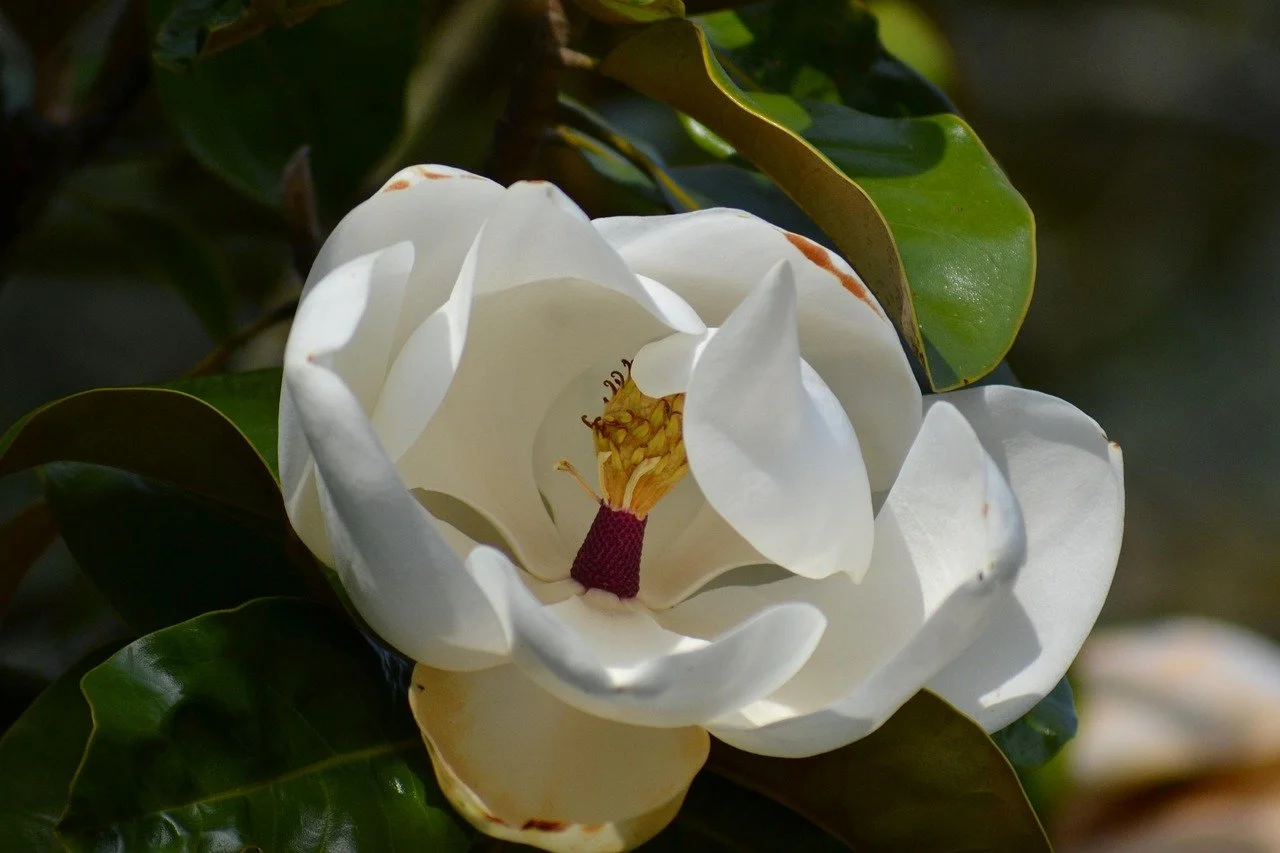
Southern Magnolia (Magnolia grandiflora): The ultimate Southern landscape feature, this massive evergreen tree provides amazing high-level interest. It is famous for its large, waxy green leaves with rusty-brown undersides and its dinner-plate-sized, fragrant white flowers that bloom in late spring and summer. Because it can reach heights of 60–80 feet, it is best used as a specimen tree or a large privacy screen on large properties. In February and March, its dense evergreen canopy provides critical shelter for nesting songbirds and protection from late-season storms.
Late Spring (April-May)
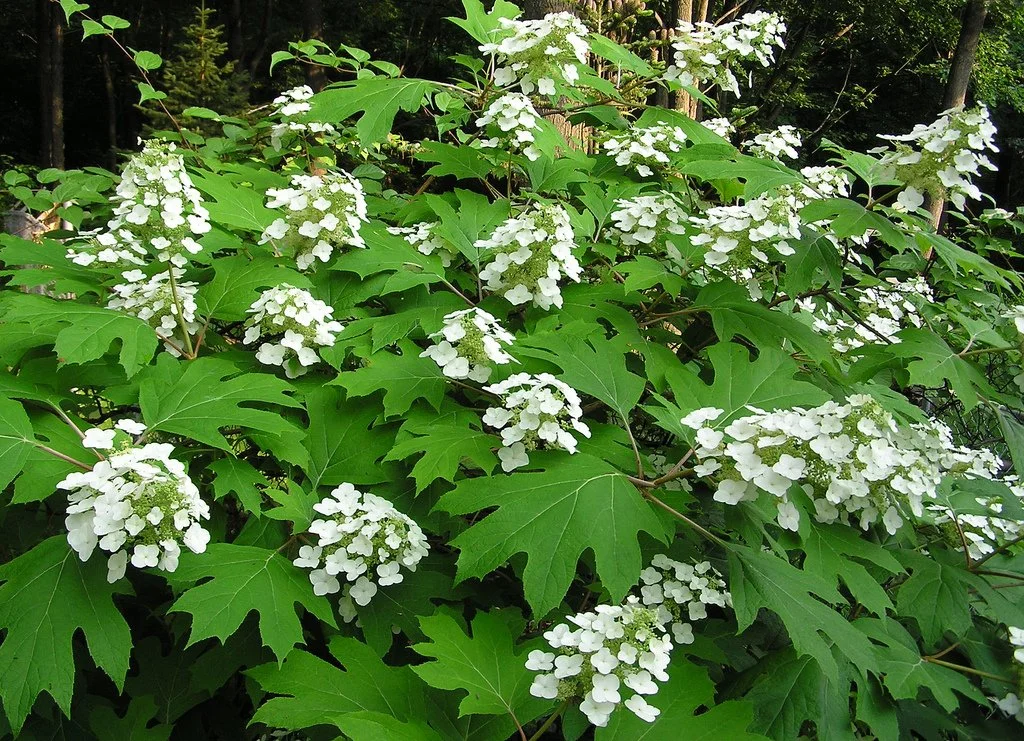
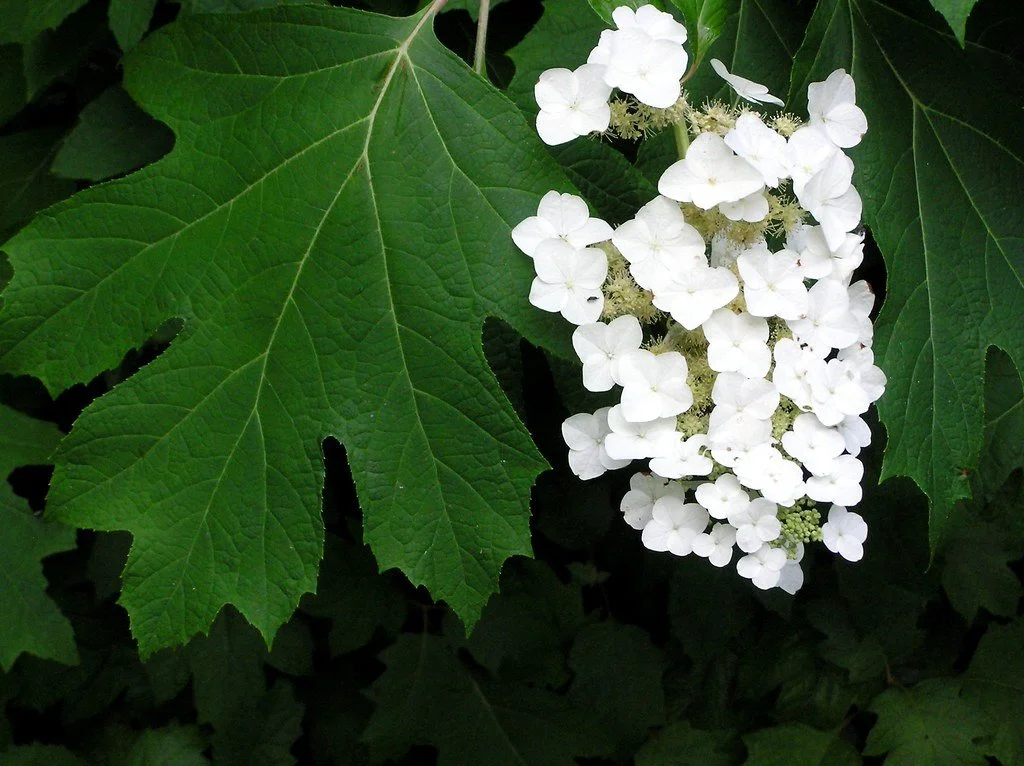
Oakleaf Hydrangea (Hydrangea quercifolia): Oakleaf Hydrangea is the state wildflower of Alabama. This hydrangea has cone-like textured white flowers that look quite unique when compared to the “pom-pom“ style flowers of a typical bush. Blooming typically starts in May as white flowers that age into a bronze color into summer. In fall, the blooms change to deep red and orange. The bushes blooms and dense branches attract various pollinators as well as nesting birds like Juncos and Sparrows. In early winter the blooms do finally die but they make an excellent food source for birds non-resident birds escaping the cold of the North.
Foraging Ahead Expert Tip: Oakleaf Hydrangea makes for an excellent wall shrub. Many landscapes in Alabama use oriental or non-native shrubbery which look lackluster and provide less than ideal habitats for native fauna. If you have a large garden wall or exterior wall that faces to the east, be sure to take this plant into consideration. Additionally, it can expand up to 8 feet wide which means fewer independent shrubs to manage.
Stoke’s Aster (Stokesia laevis): This is a unique, low-mounding perennial native to the Southeast that produces large, fringed cornflower-blue blooms. Reaching only 12–18 inches in height, it is a high-impact choice for low-level interest at the front of a border. Unlike many other asters that bloom only in the fall, Stoke’s Aster begins its show in late spring. Its evergreen ground foliage stays low, providing green cover even in the winter months. It prefers full sun but can tolerate light afternoon shade, making it a flexible option for Alabama's varied light conditions.
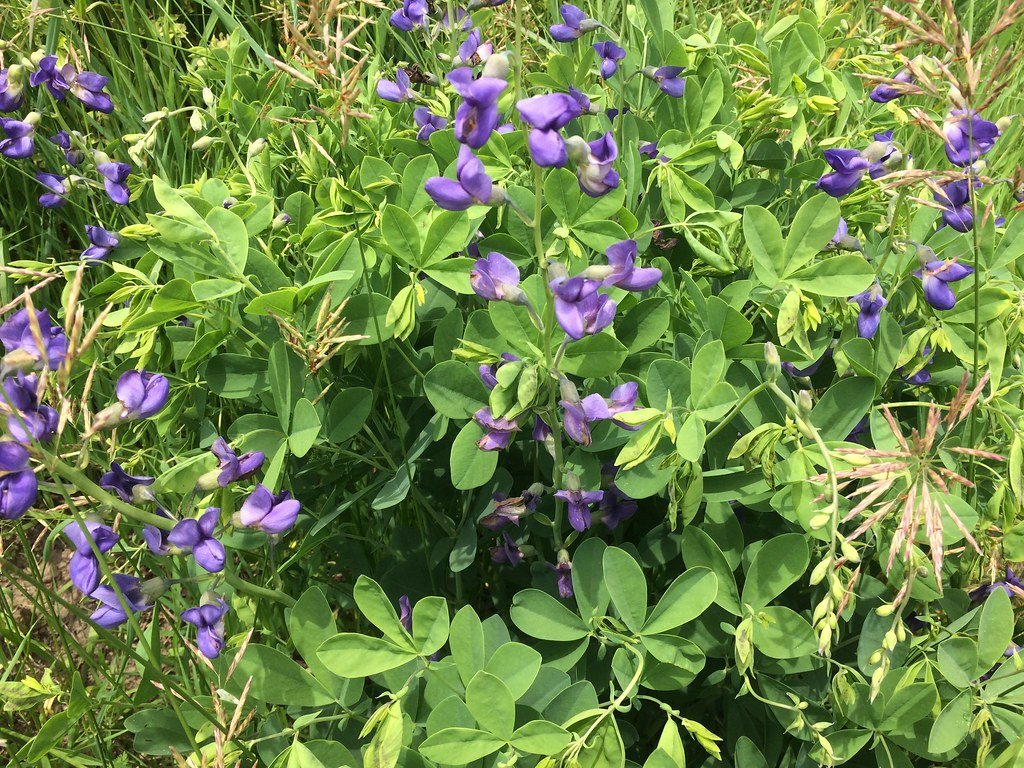
Blue False Indigo (Baptisia australis): This is a structural, long-lived perennial that acts almost like a small shrub in the landscape. Starting in late March and April, it sends up tall spikes of deep lupine-blue flowers that provide a high-impact mid-level interest, typically reaching 3–4 feet in height and width. Its clover-like, blue-green foliage remains clean and attractive throughout the humid Alabama summer, long after the blooms have faded. Because it develops a massive, woody taproot, it is incredibly drought-tolerant once established but, much like the Butterfly Weed, it strongly dislikes being moved. In the fall, the seed pods turn a charcoal black and "rattle" in the wind, providing unique auditory and visual interest. It is a host plant for several species of Sulphur butterflies. As a legume, it naturally fixes atmospheric nitrogen through root nodules, gradually improving soil health over time which is very beneficial for nearby specimens in your landscape or garden.
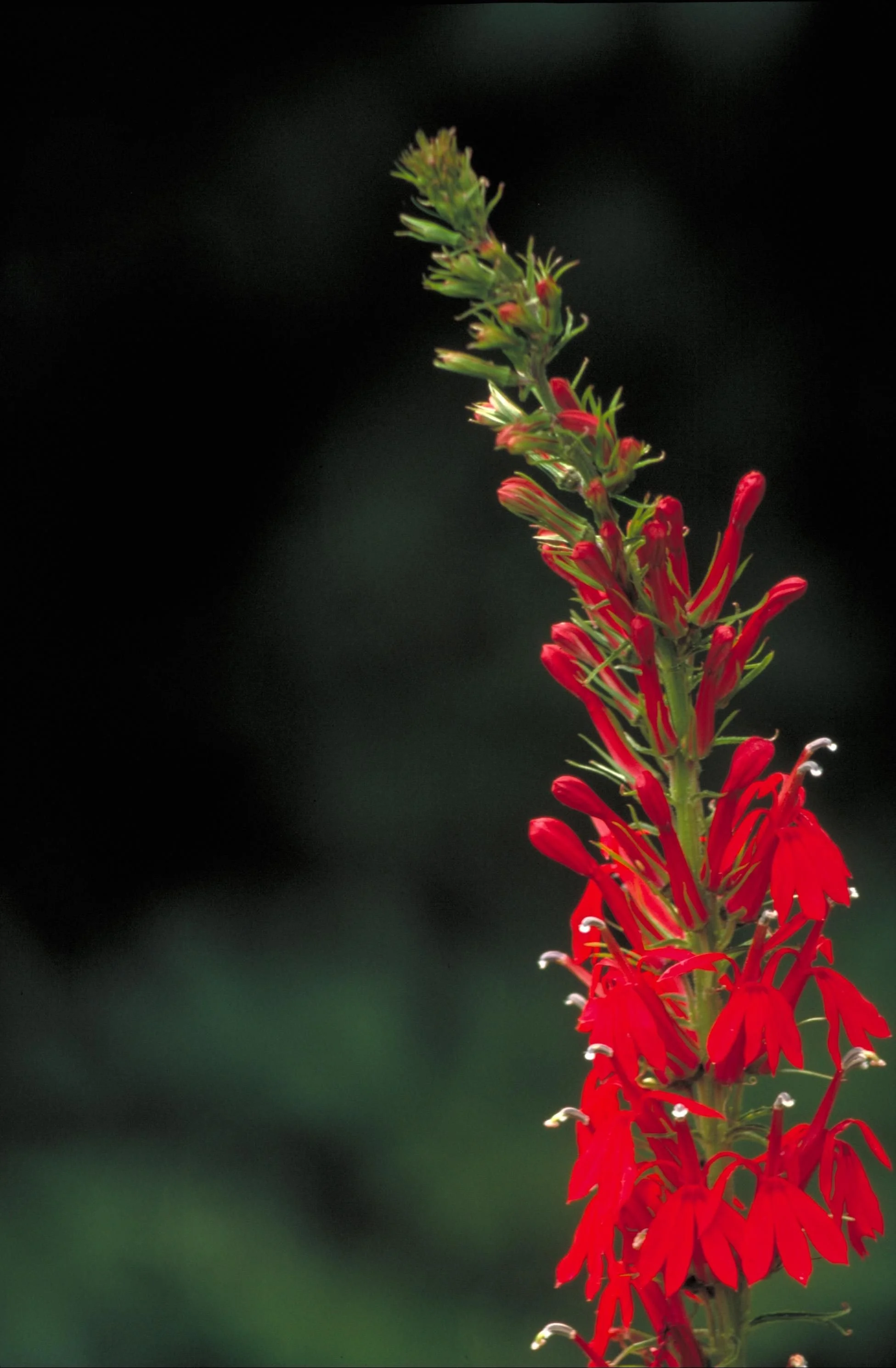
Cardinal Flower (Lobelia cardinalis): Named for the vivid red robes worn by Catholic cardinals, this perennial produces some of the most intense crimson blooms found in nature. It features tall, upright spikes of tubular flowers that typically reach 2–4 feet in height, providing a striking vertical element for mid-level interest. Because it is native to stream banks and swamps, it thrives in moist to wet soils and is an ideal choice for rain gardens or low-lying areas of an Alabama landscape that stay damp. It is a primary nectar source for Ruby-throated Hummingbirds, who are specifically attracted to its height and color. While it prefers partial shade, it can handle full sun if the soil is kept consistently wet.
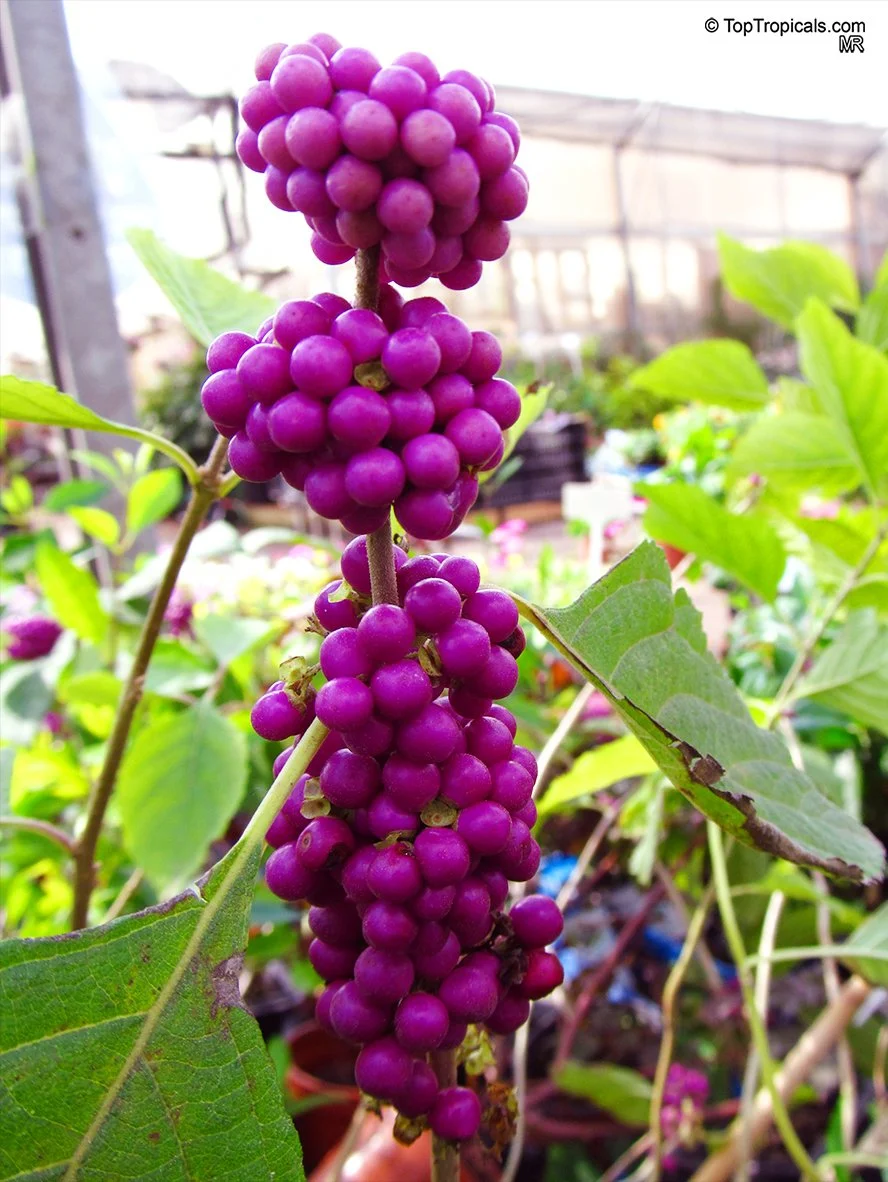
Beautyberry (Callicarpa americana): A flower that flourishes in the deep south known for its dense clusters of jewel-toned purple fruits that wrap around the stems in late summer and fall. It is exceptionally low maintenance, handles sun to partial shade, and provides a solid medium layer at 3–6 feet tall. Beyond its visual impact, the foliage contains compounds that serve as a natural insect repellent, while the berries provide a vital late-season food source for over 40 species of songbirds.
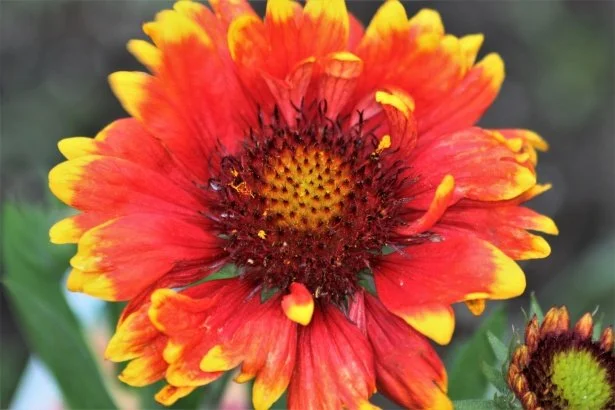
Blanket Flower (Gaillardia pulchella): An amazing pollinator species that features long-lasting red and yellow blooms from April through November. It is highly resilient in sandy soils with limited moisture and functions as a vibrant low-level interest plant. Because it can readily reseed itself in the landscape, it is perfect for "meadow-style" patches where you want consistent, vivid color with almost zero intervention.
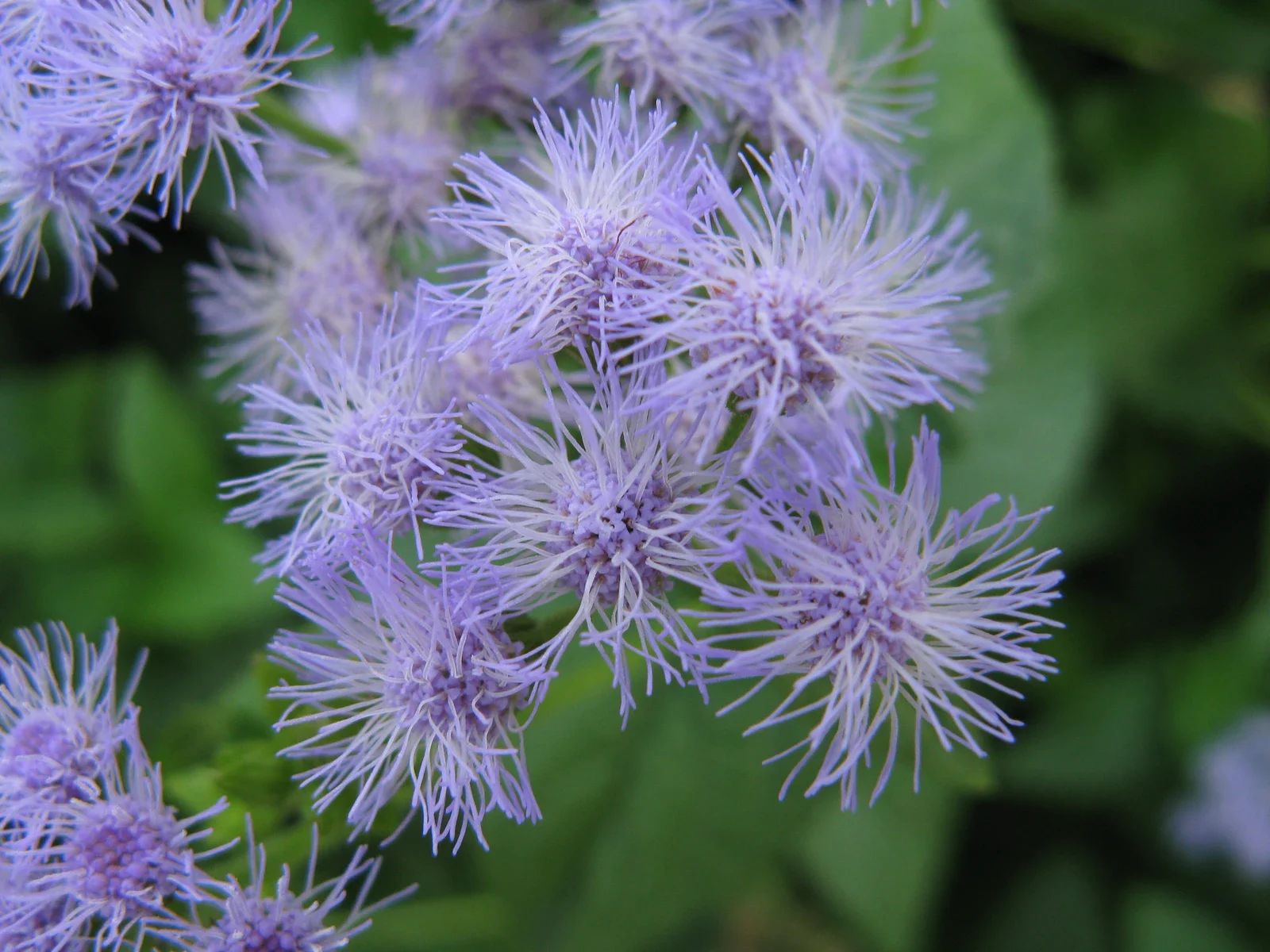
Blue Mist Flower (Conoclinium coelestinum): Also known as wild ageratum, it provides beautiful late-season blue/purple color from August to November. It is a hardy, rhizomatic spreader that works well as an aggressive space filler in wild-type gardens or "pocket prairies." Growing 1–3 feet tall, it fills the low-to-mid level gap and is a magnet for late-season butterflies, such as Monarchs, who need the nectar for their southern migration.
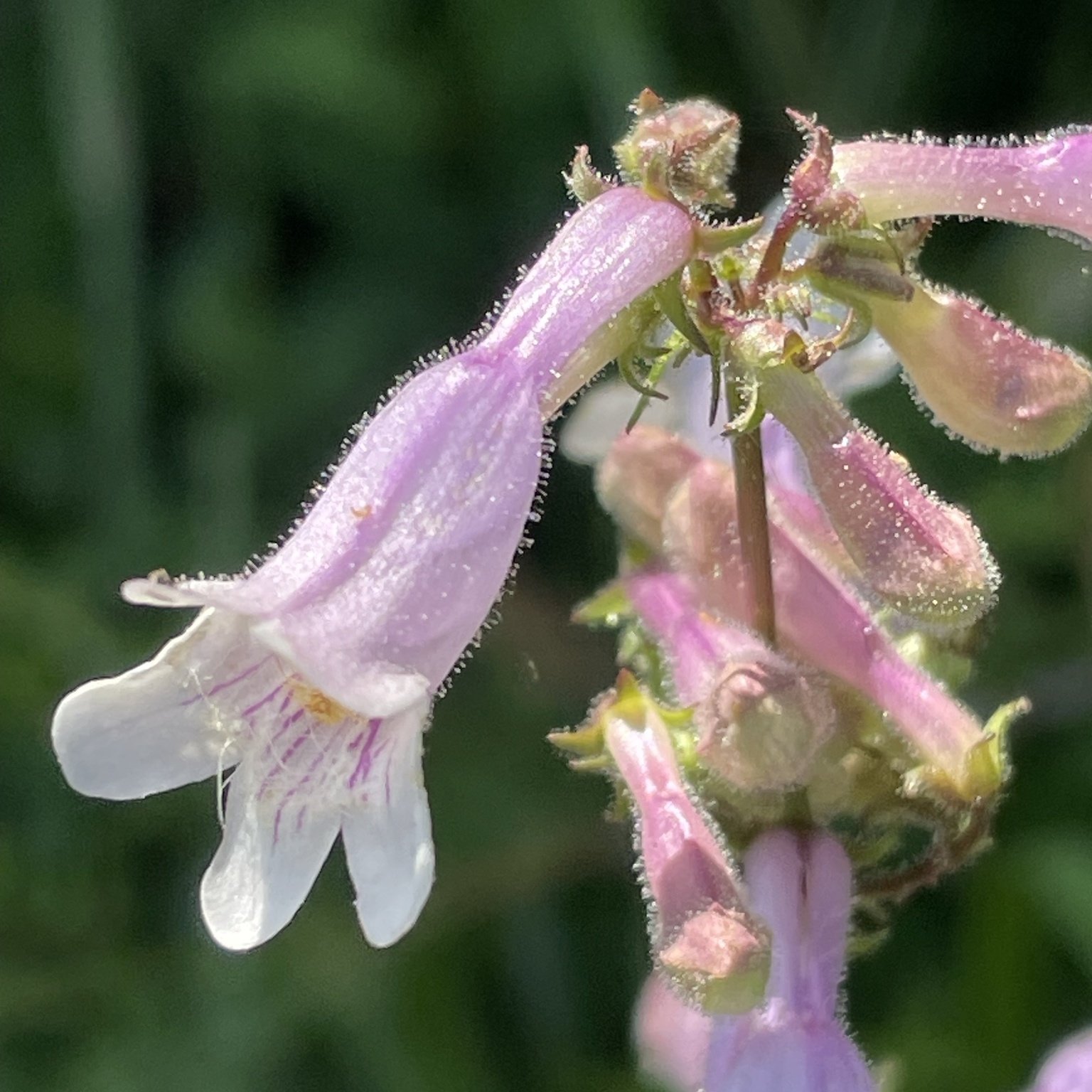
Eastern Beard-tongue (Penstemon laevigatus): This perennial produces nectar-rich, tubular white to lavender blooms from April to June. It is ecologically significant as both a nectar source and a larval host plant for various pollinators, including the Baltimore Checkerspot butterfly. Reaching 1–3 feet, it offers a refined, upright structure for the mid-ground of a perennial bed and is surprisingly tolerant of the heavy clay soils often found in Alabama.
Foraging Ahead Expert Tip: If your property has a substantial amount of Alabama red clay around existing bushes or low porches you can use this weed-like native as a mid-level filler. It’s hardy and has a high tolerance for constant root moisture. It also has a subtle beauty to it even though some consider it nothing more than a roadside weed. It’s perfect for rural areas around Madison and Huntsville Alabama.
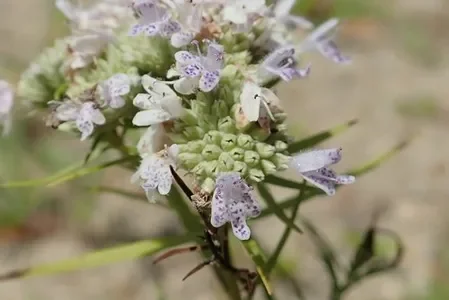
Slender Mountain Mint (Pycnanthemum tenuifolium): A fragrant, fine-textured plant that produces silvery-white flower clusters from May to September. It is a high-value habitat plant that attracts an incredible diversity of pollinators, including beneficial predatory wasps. It is hardy enough to tolerate foot traffic and light mowing, making it a "tough-as-nails" choice for the edges of paths or sunny transition zones.
Niche Natives
Sedges (Carex spp.): With 150 native species, sedges make versatile ground covers and "green mulch" for almost any garden setting. These grass-like perennials provide critical cover for ground-nesting birds and serve as host plants for several species of skipper butterflies and moths.
Virginia Sweetspire (Itea virginica): This is one of our most versatile shrubs; more sun will give you more blooms and amazing purple-to-red fall color. It thrives in moist, acidic soils and attracts a wide variety of native bees and butterflies to its fragrant spring nectar.
Dwarf Fothergilla (Fothergilla gardenii): A compact shrub that produces honey-scented, white "bottlebrush" flowers in early spring before its leaves fully emerge. It is a high-value plant for early-season pollinators and provides dense cover for small songbirds in woodland edges.
White Wood Aster (Eurybia divaricata): This shade-tolerant perennial produces a cloud of white flowers that brighten dark corners and woodland floor habitats in late summer. It is an essential late-season nectar source for migrating butterflies and provides seeds for small finches in the winter.
Buttonbush (Cephalanthus occidentalis): This moisture-loving shrub produces unique, spherical white flowers that act as an amazing nectar source for butterflies and honeybees. It is a cornerstone species for wetland habitats and rain gardens, often providing nesting sites for wood ducks and other water birds.
Coral Honeysuckle (Lonicera sempervirens): Not to be confused with invasive species, this native vine features tubular red flowers designed specifically for the long tongues of Ruby-throated Hummingbirds. It serves as a host plant for the Snowberry Clearwing moth and provides berries for purple finches and goldfinches.
Eastern Yarrow (Achillea gracilis): This newly described species endemic to the eastern US features feathery foliage and flat-topped flower clusters that serve as landing pads for diverse pollinators. It is a rugged, sun-loving plant that provides habitat for beneficial predatory insects like ladybugs and lacewings.
Big Bluestem (Andropogon gerardi): A beautiful "statement piece" for corners or meadow edges, this tall native grass is famously loved by fireflies for summer roosting. Its deep root system stabilizes soil while its tall stems provide essential nesting material and winter cover for small mammals and birds.
Eastern Bluestar (Amsonia tabernaemontana): If the stunning sky-blue spring blooms don't sell you on this plant, its vibrant gold fall color certainly will. It is a hardy, sun-loving perennial that serves as a host plant for the Hummingbird Clearwing moth and is generally avoided by deer.
Purple Passionflower (Passiflora incarnata): This fast-growing vine produces exotic purple blooms and serves as the primary host plant for the Gulf Fritillary butterfly. It thrives in sunny fencerows and open fields, producing "maypop" fruits that are a favorite food source for various Alabama wildlife.
Common Serviceberry (Amelanchier arborea): A great native replacement for the Bradford Pear, this small tree produces early spring flowers followed by delicious berries. It is a critical habitat tree, providing early-season nectar for bees and high-energy fruit that is quickly devoured by cedar waxwings and cardinals.
Foraging Ahead Expert Tip: Sedges are amazing at filling in the edges of rock gardens and terraced areas. They spread naturally and hang over walls, providing textured coverage that creates a unique, "soft" look. While they don't have showy blooms for bees, they are vital host plants for native butterfly larvae and provide thick cover for beneficial predatory insects. With hundreds of varieties to choose from and a low price point, we believe they are an excellent, low-maintenance ground cover for North Alabama landscapes.
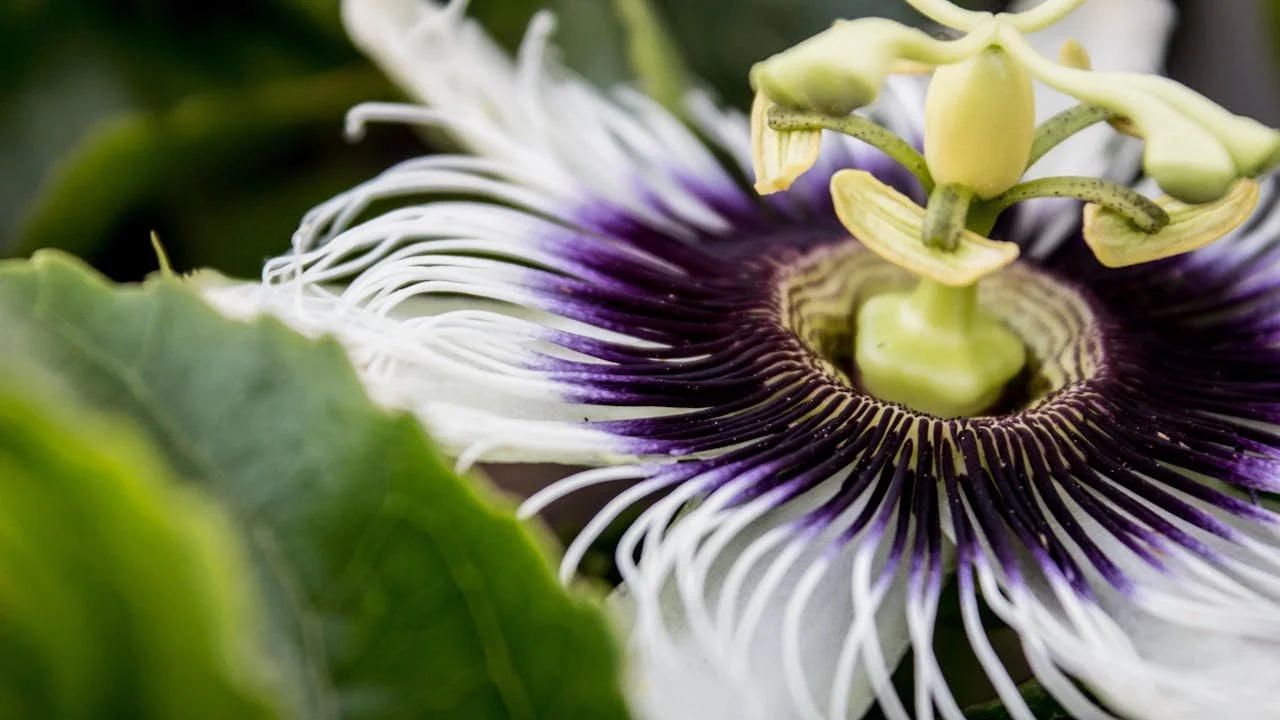
Purple Passionflower close up
Our Top Nine Picks for Spring Habitat Interest
If you’re living around Huntsville or Madison we’re sure that you’ve encountered plants at the big box stores that can’t live past the heat and humidity in August. We compiled this final list to give you simple choices with high success rates. Natives are always the best choice when considering a habitat-centric landscape design for their beauty and practicality. You’ll easily be able to enjoy these flowers in some capacity through spring and beyond.
Spotted Geranium (Geranium maculatum): This mounding perennial produces lavender-pink flowers and deeply lobed foliage that thrives in shaded Alabama borders. Reaching 1–2 feet, it serves as a reliable low-level interest plant that handles Southern humidity better than most non-native varieties.
Virginia Bluebells (Mertensia virginica): These iconic spring ephemerals feature nodding flowers that transition from pink buds to vibrant sky blue in March and April. They provide a high-impact low-to-mid level burst of color before going dormant and disappearing by midsummer.
Dwarf Crested Iris (Iris cristata): A spreading, 6-inch tall iris that creates a low-level carpet of spiked foliage and intricate, pale blue flowers in mid-spring. It is an excellent choice for stabilizing shaded slopes or lining woodland paths via its shallow rhizomes.
Blue Wood Phlox (Phlox divaricata): This semi-evergreen perennial produces fragrant, lavender-blue clusters that provide a glowing low-level interest in dappled shade. It is a vital April nectar source for swallowtail butterflies and works perfectly as a groundcover under larger shrubs.
Foxglove Beardtongue (Penstemon digitalis): A structural mid-level plant that sends up 3–5 foot spikes of tubular white flowers in late spring. It is highly adaptable to Alabama’s heavy clay soils and serves as a major draw for bumblebees and hummingbirds.
Golden Ragwort (Packera aurea): This rugged evergreen groundcover produces cheerful yellow daisy-like flowers in early spring and thrives in wet, deep shade. It spreads effectively to form a dense weed-suppressing mat, making it ideal for filling hard to reach or irregular areas in the landscape.
Heartleaf Foamflower (Tiarella cordifolia): A delicate, low-level perennial prized for its "foamy" white flower spikes and burgundy-veined, heart-shaped leaves. It forms a polite, non-aggressive groundcover that pairs perfectly with ferns in a moist woodland setting.
Jacob’s Ladder (Polemonium reptans): Named for its ladder-like foliage, this 1-foot tall plant offers a fine texture and soft blue, bell-shaped flowers in mid-spring. It is a slow-growing, deer-resistant choice that performs best in shaded, moist locations.
Common Blue Violet (Viola sororia): This resilient 6-inch perennial provides one of the earliest nectar sources in February and serves as a critical host plant for Fritillary butterflies. It is a versatile "living mulch" that can thrive in almost any light condition across the state.
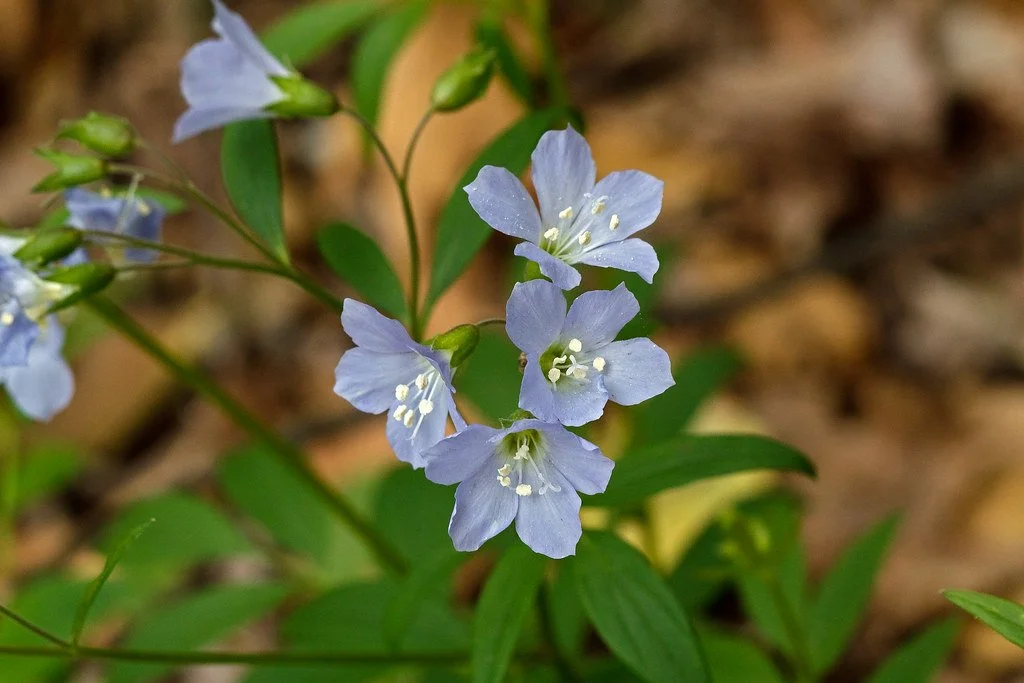
Jacob's Ladder blooming in the wild
Overall, Alabama's unique spring window offers incredible options for beautifying your landscape. At Foraging Ahead, we believe a garden truly shines when it embraces a diverse range of blooms and textures. With our deep-rooted expertise in native flowers, edible plants, and natural landscaping, we're here to help. Ready to transform your outdoor space? Click below to explore our services and see how we can bring your vision to life!